Editor’s note: TravelQ is a series that documents the diverse experiences of queer and trans travelers as we negotiate dressing our most authentic selves with navigating complex travel obstacles unique to our communities. We have returned with a very special piece featuring Argentina with stops in Buenos Aires, Patagonia, and a day trip to Uruguay.
Buenos Aires
A city that sees you
We spent ten days traveling through Argentina, with stops in Buenos Aires, Patagonia, and a day trip to Uruguay, and what stayed with me most wasn’t just the beauty, though there was plenty of it. It was the ease. Traveling with my partner of 16 years, there was a feeling of being allowed to exist without explanation. To wander. To linger. To be visibly queer in public space without shrinking or bracing. Argentina met us with curiosity instead of caution. Buenos Aires specifically is one of those rare cities where LGBTQ travelers don’t just feel welcome, but are built into the fabric of the culture.
Buenos Aires was our entry point and our anchor. From there, we headed south into Patagonia and later crossed the Río de la Plata by ferry into Colonia del Sacramento. Along the way, we ate well, drank often, walked endlessly, and took our time.
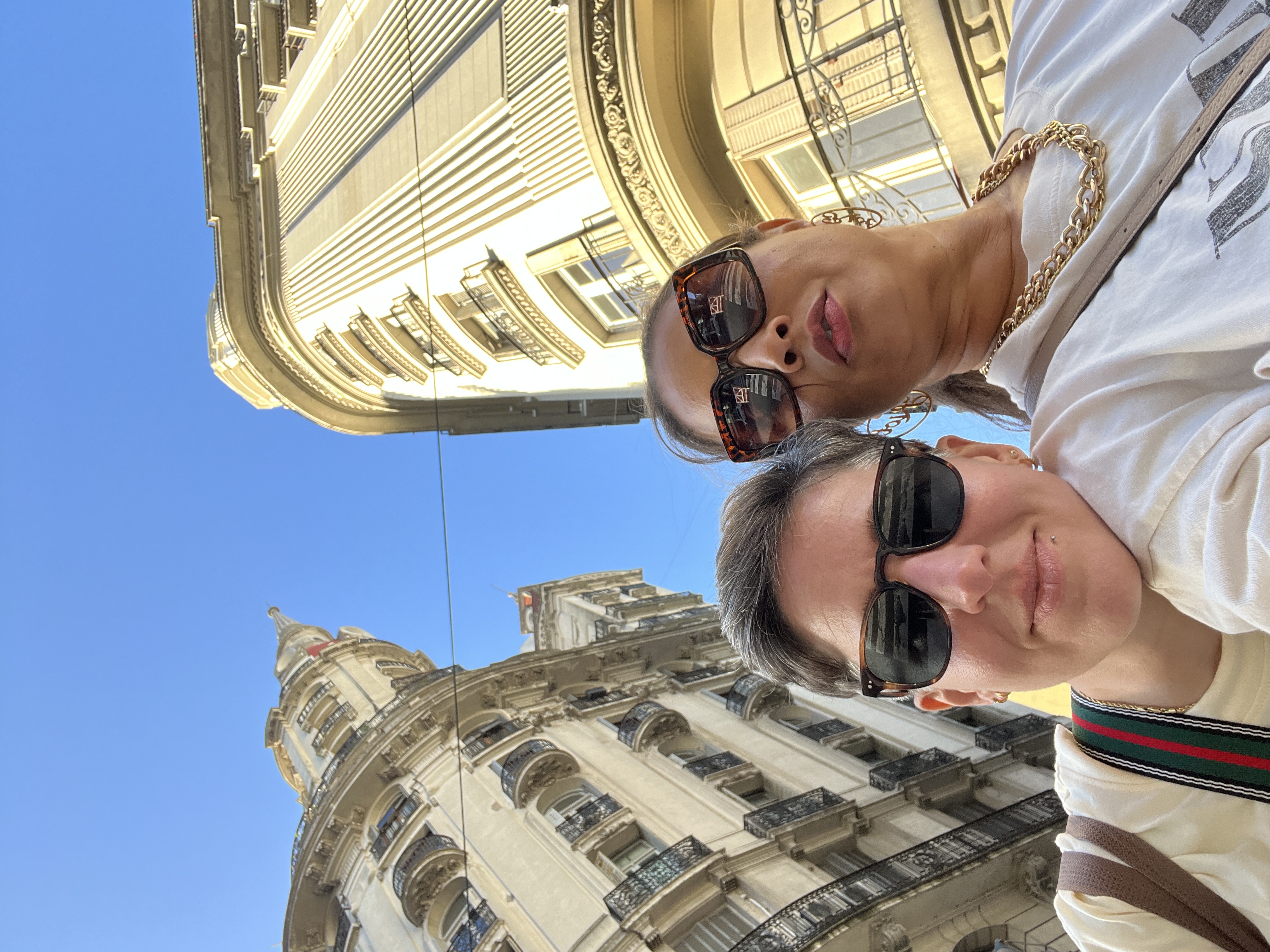
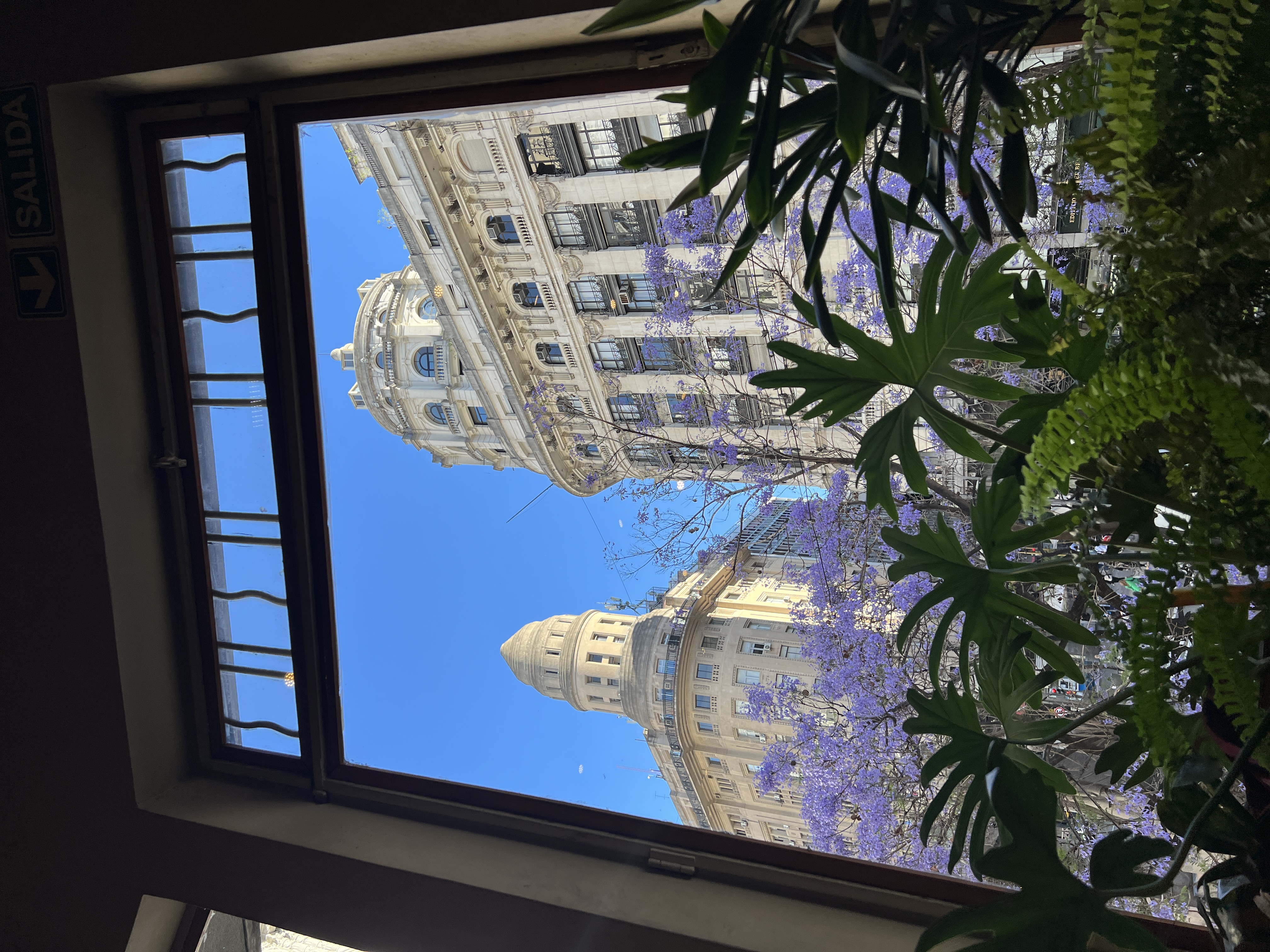
And then there’s the beauty of Buenos Aires architecture. The wide boulevards. The elaborate buildings. The balconies and long avenues that earned it the nickname the Paris of South America and once you start walking, the comparison makes sense. In the late nineteenth and early twentieth centuries, Argentina experienced enormous economic growth and intentionally modeled its capital after European cities, especially Paris. Architects were brought in from France and Italy and you can see the intentional modeling in every corner. The difference is that the city has the South American hospitality, so there is an easiness without the rush.
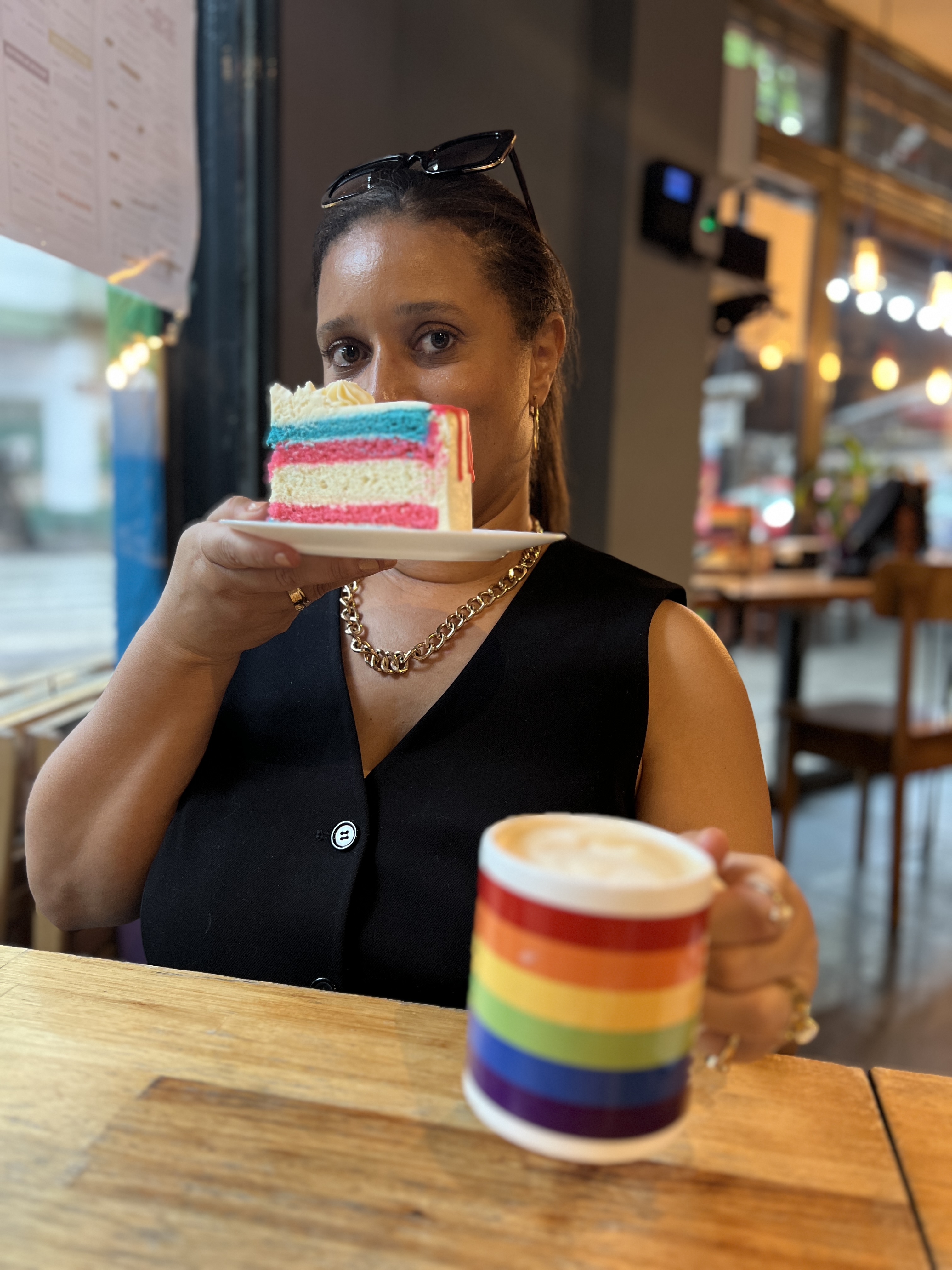
Which brings me to the slow café culture and the city’s recent coffee shop renaissance. Similar to NYC, local, specialty coffee shops are making a comeback over large chains. There’s a specialty café on almost every corner, each with its own vibe. Cafés here aren’t pit stops. They’re part of daily life. Mate may be the national drink, but when traveling with a Bosnian (my partner), coffee is a must. I did my research before we arrived because traveling with her un-caffeinated is a risk I wasn’t willing to take. If you are a traveler who plans their itineraries around coffee shops, you will not be disappointed!
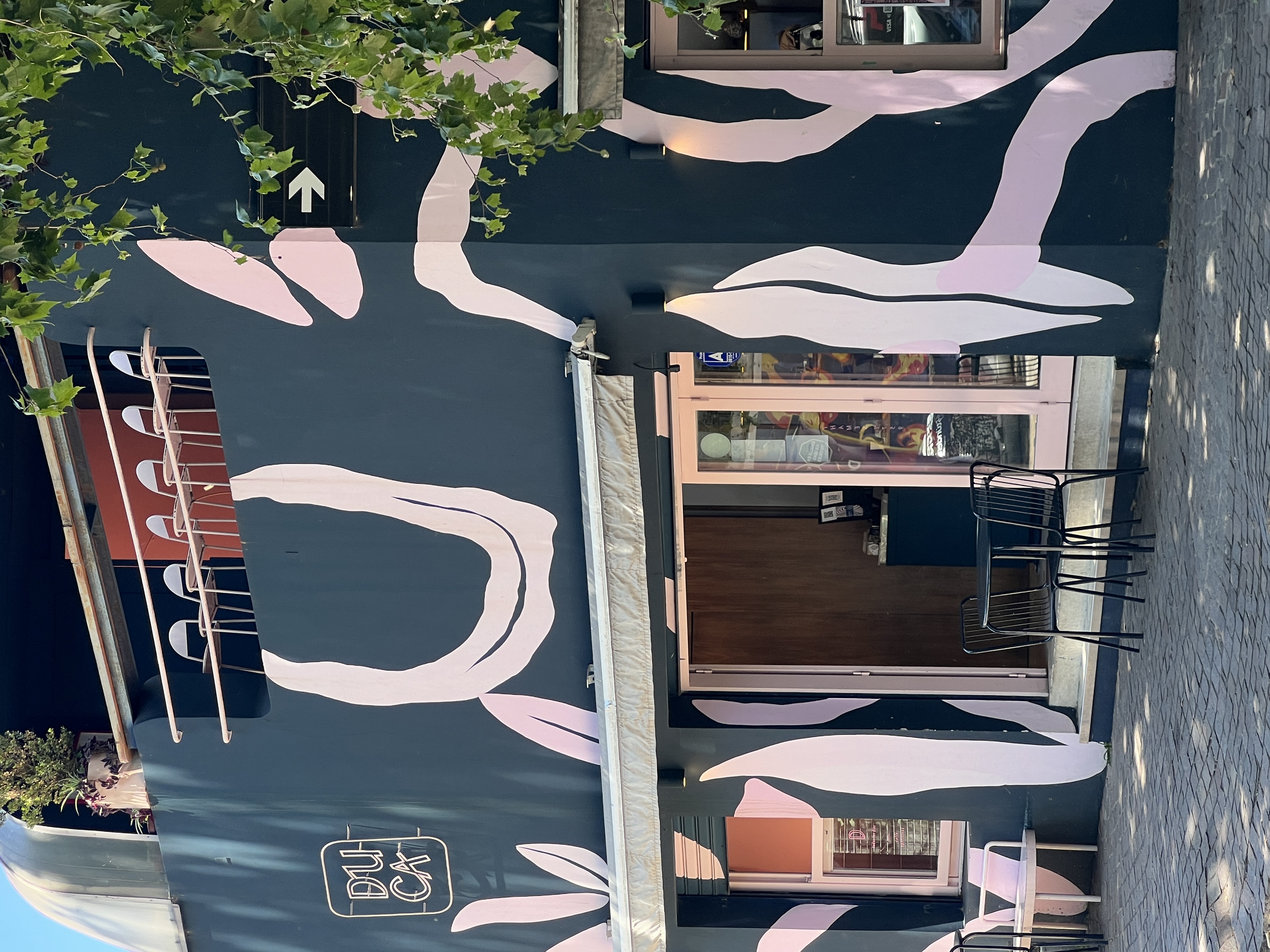
Here are the places that shaped the trip, where we stayed, explored, and took our time over good food and strong coffee.
Stay: Why We Chose Palermo as Our Home Base
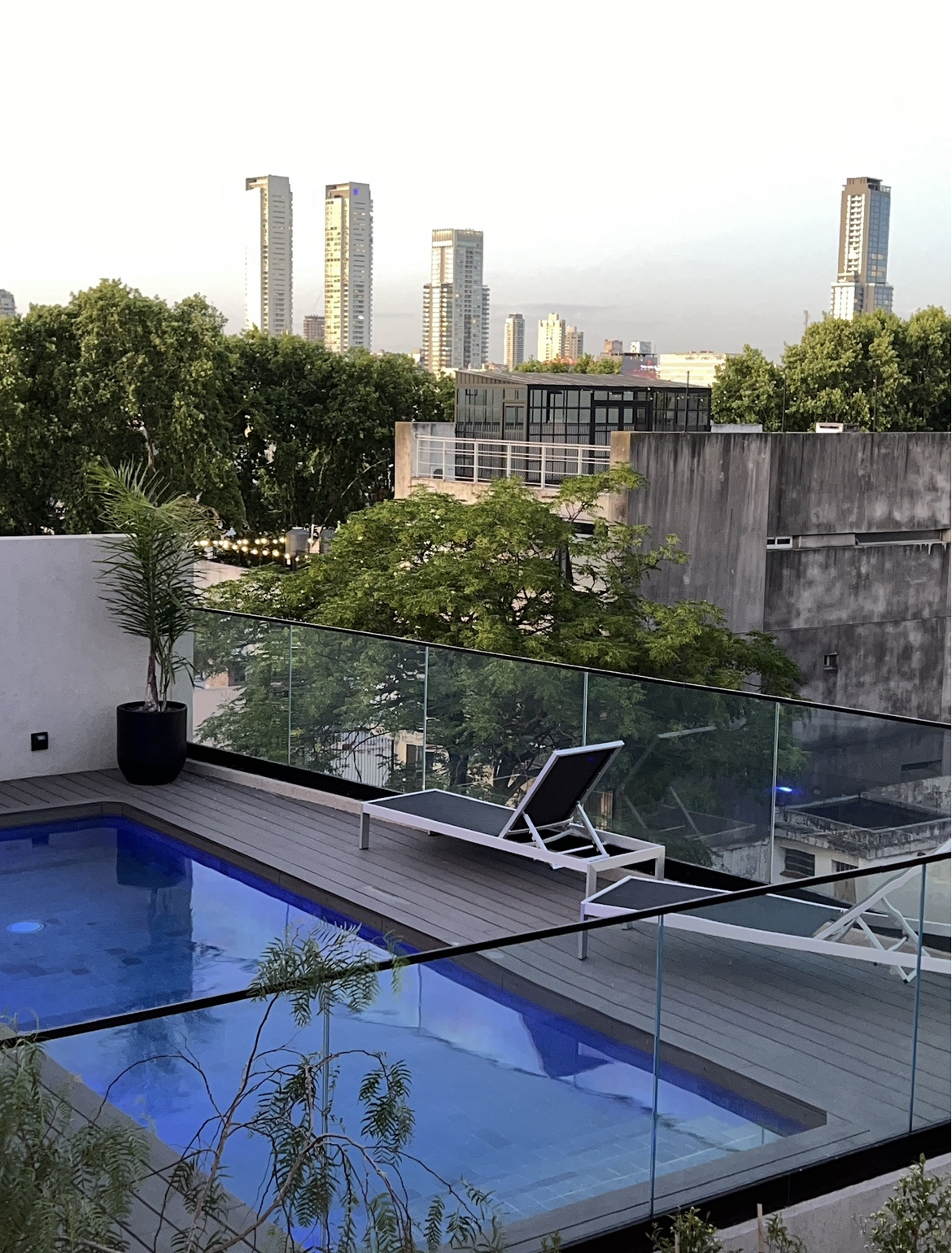
Buenos Aires has many beautiful and busteling neighborhoods that are safe for LGBTQ+ and solo travelers. San Telmo is historic and textured. Recoleta is elegant and restrained. Downtown is civic and charged. Chacarita is creative and unpolished.
We chose Palermo as our home base because it’s hip, artist vibe that is walkable and also near multiple, affordable forms of public transportation. (On a side note, I love the buses in Buenos Aires. They were 24/7, clean, had wide seats, and each neighborhood bus is uniquely decorated.)
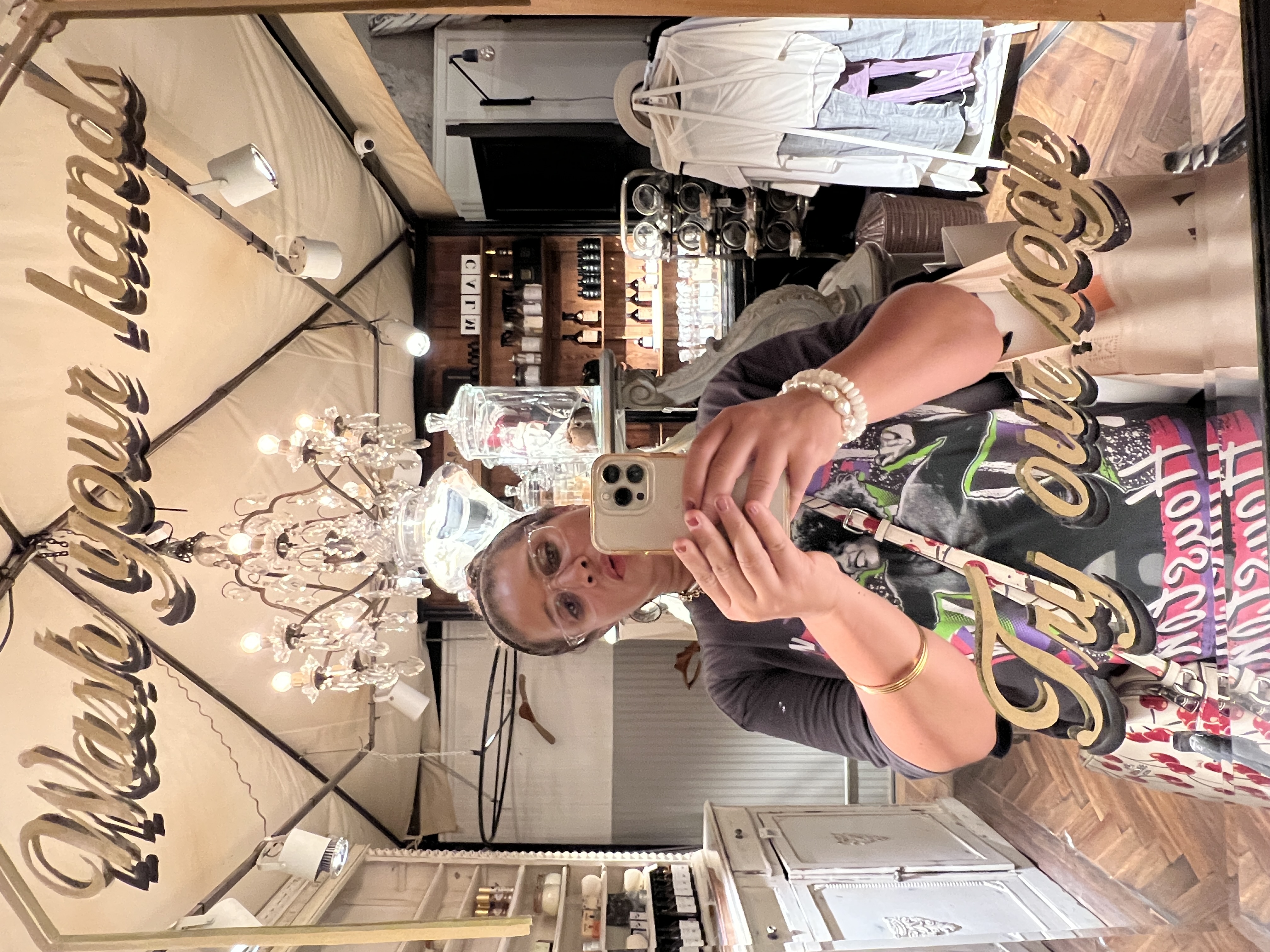
Palermo is expansive and leafy, made up of smaller pockets like Palermo Soho and Palermo Hollywood. Streets are walkable. Cafés are plentiful. People actually live here. They meet friends here. They linger over long coffees and late (well late for the U.S.) night dinners.
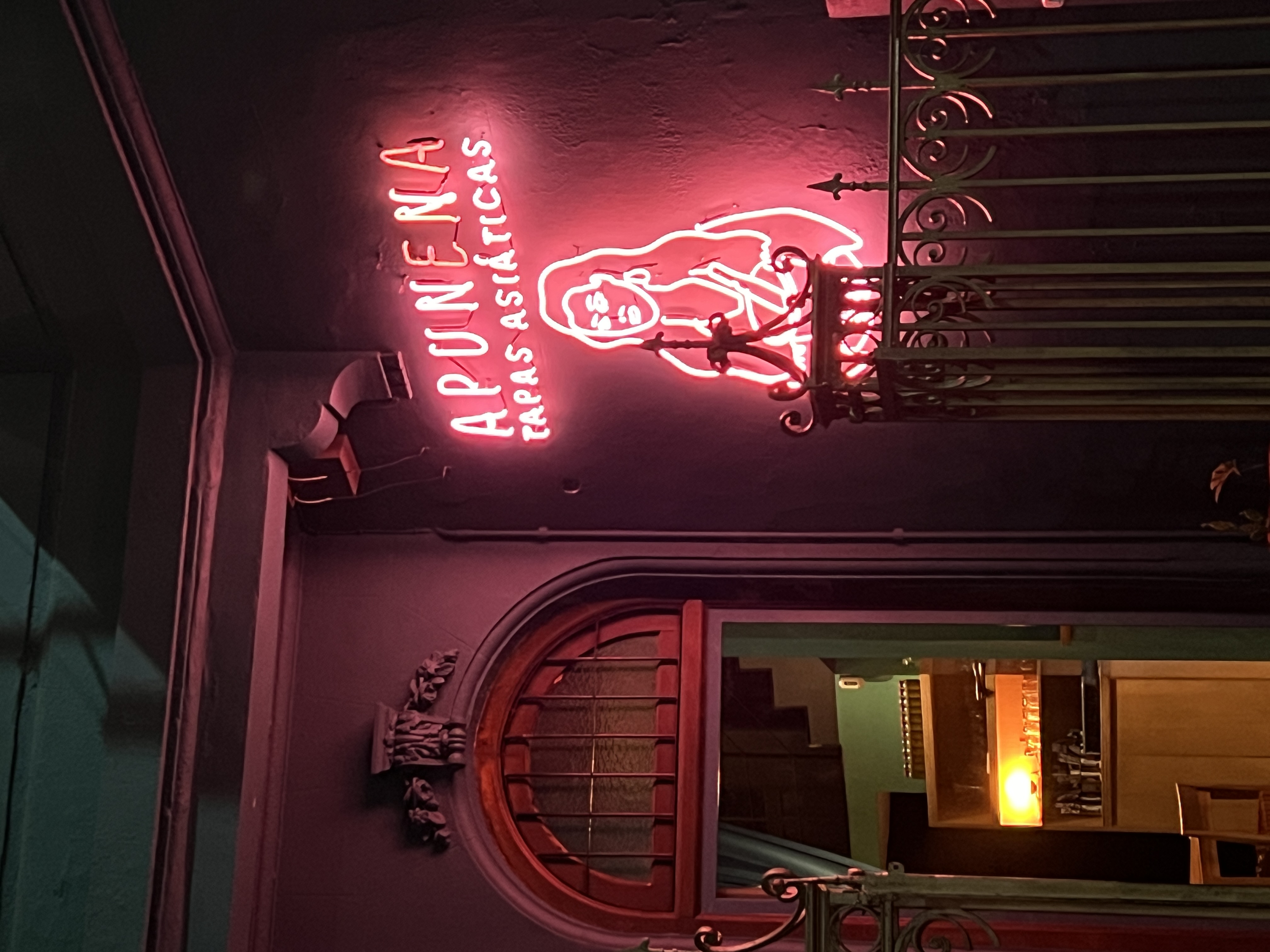
It’s social without being overwhelming and stylish without feeling precious. Staying in Palermo allowed us to settle into a rhythm that felt like home.
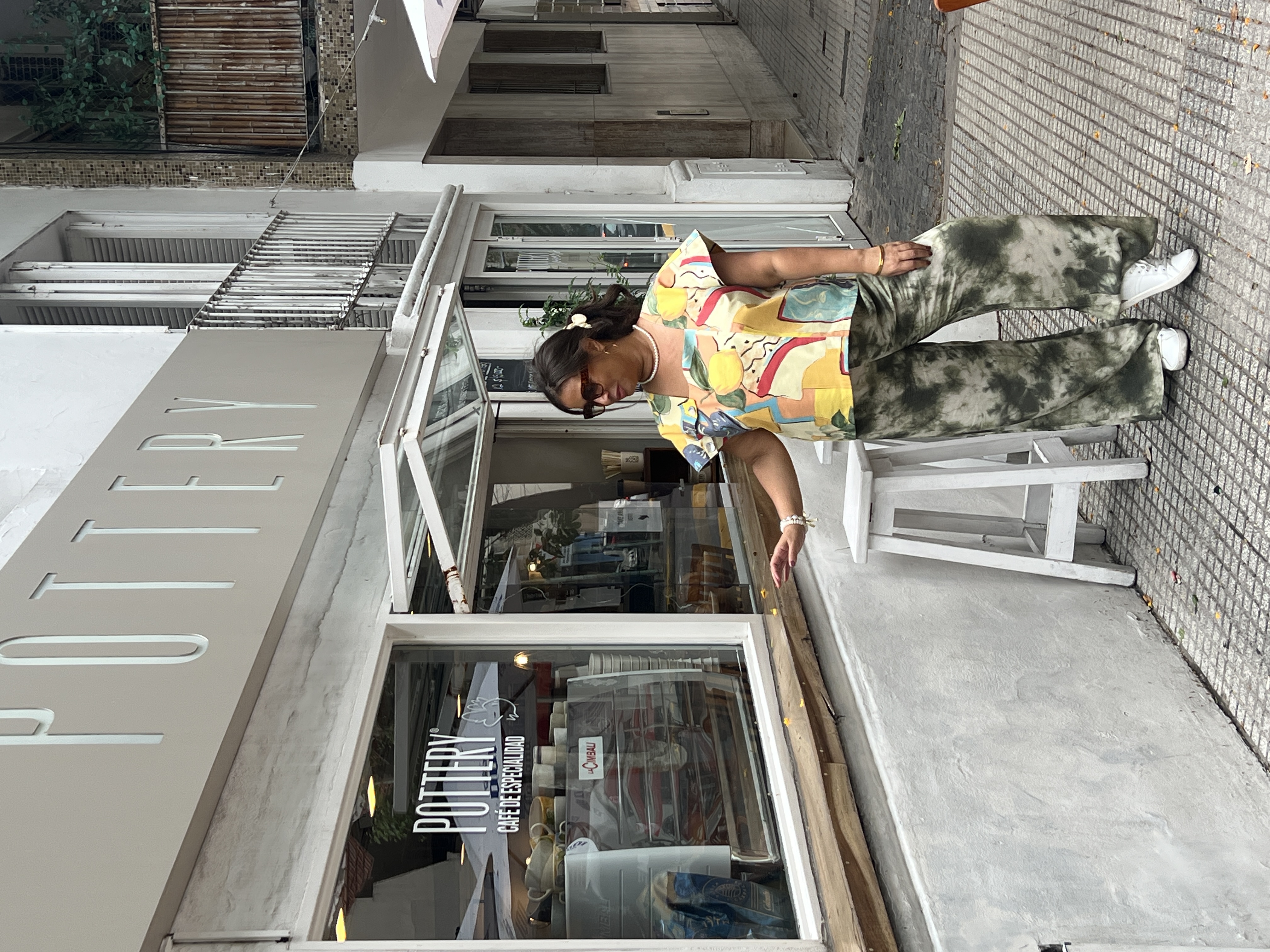
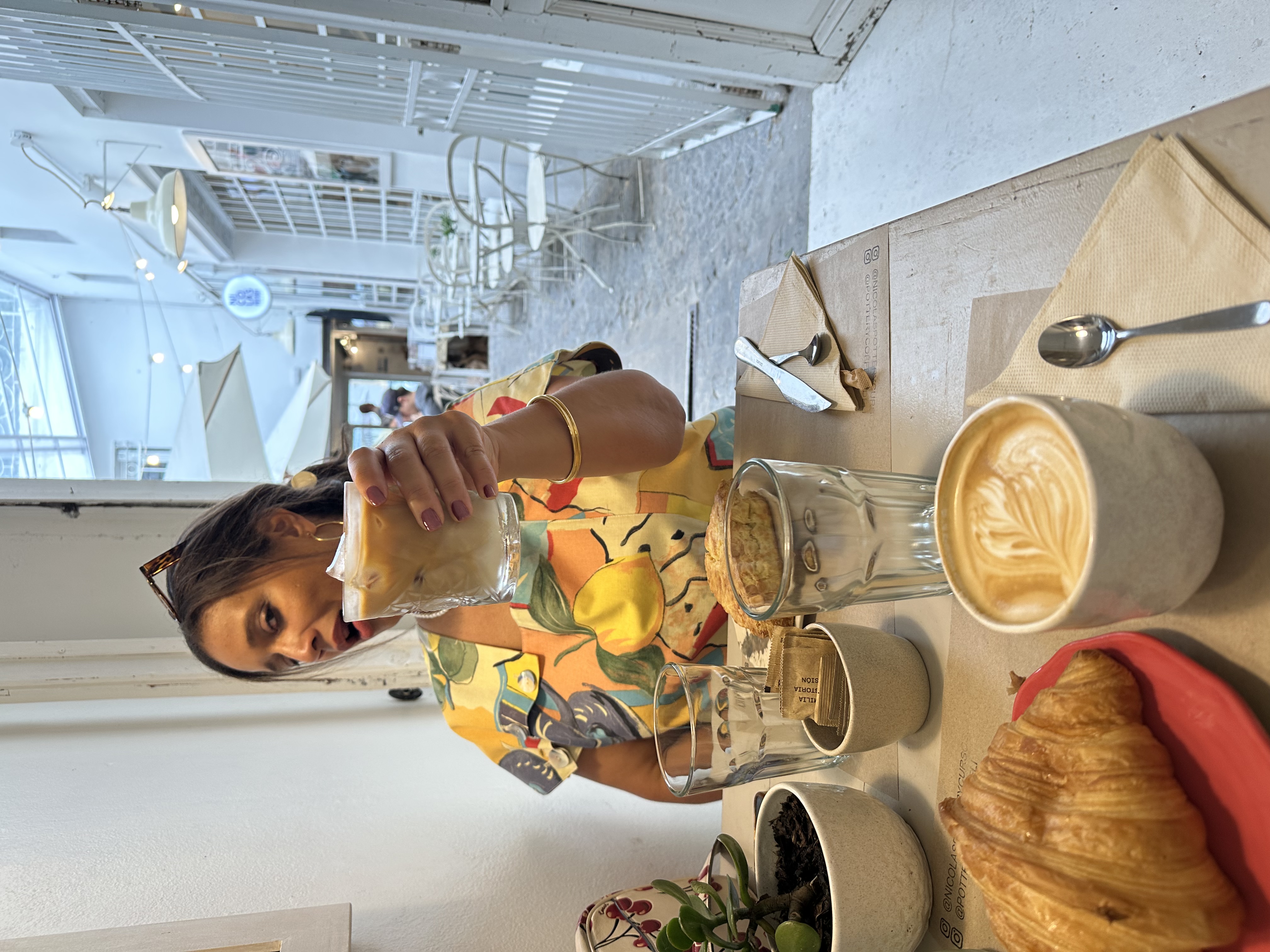
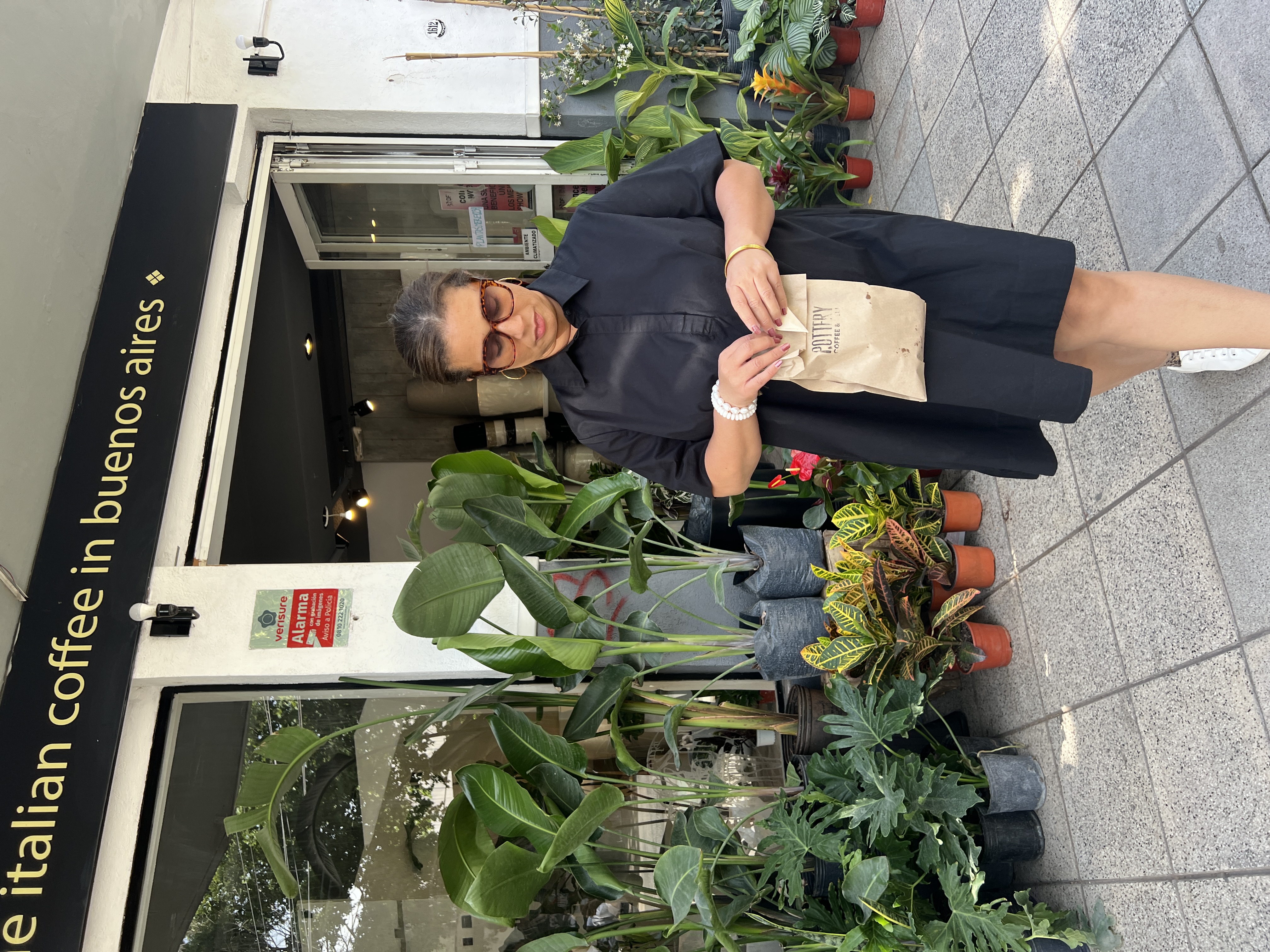
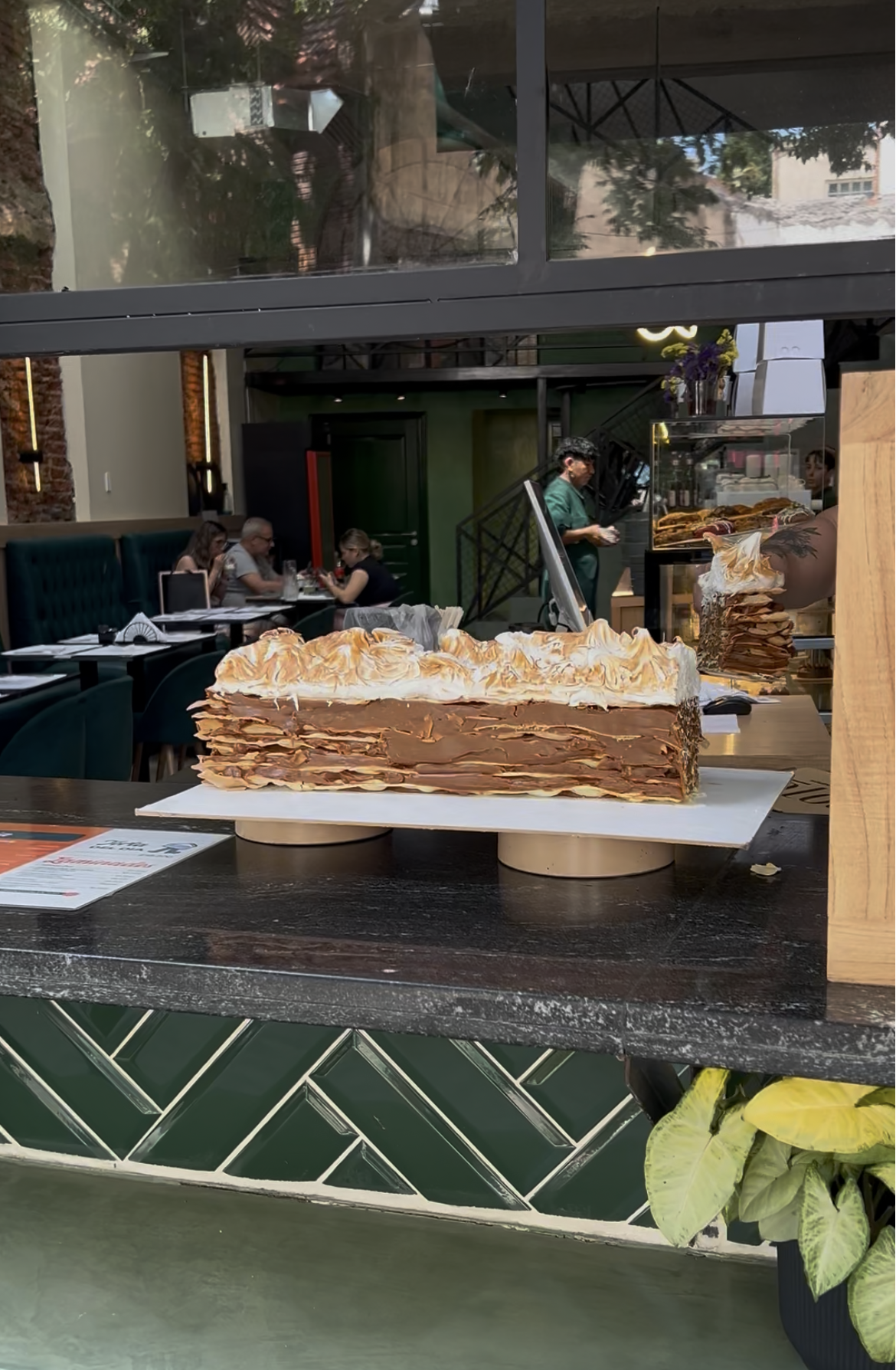
It’s also where Buenos Aires’ café culture really shines. Specialty coffee shops are everywhere, thoughtfully designed and unhurried. Starting and ending our days here shaped how we experienced the city as a whole.
Exploring Palermo
Palermo feels like daily life.
Jacaranda trees line the streets. Sidewalks are active but not chaotic. Designers, writers, students, freelancers, and longtime residents all share the same blocks. It’s the kind of neighborhood where you start recognizing faces by day three.
Many people described Palermo as somewhat like Brooklyn. I didn’t find that to be the case. I found it to be a unique neighborhood like no other, but if I were to compare it to NYC neighborhoods, I would describe the area (which includes an area called Palermo SoHo), to be like SoHo and the Meatpacking District pre-9/11 and the West Village pre-TikTok.
Las Flores
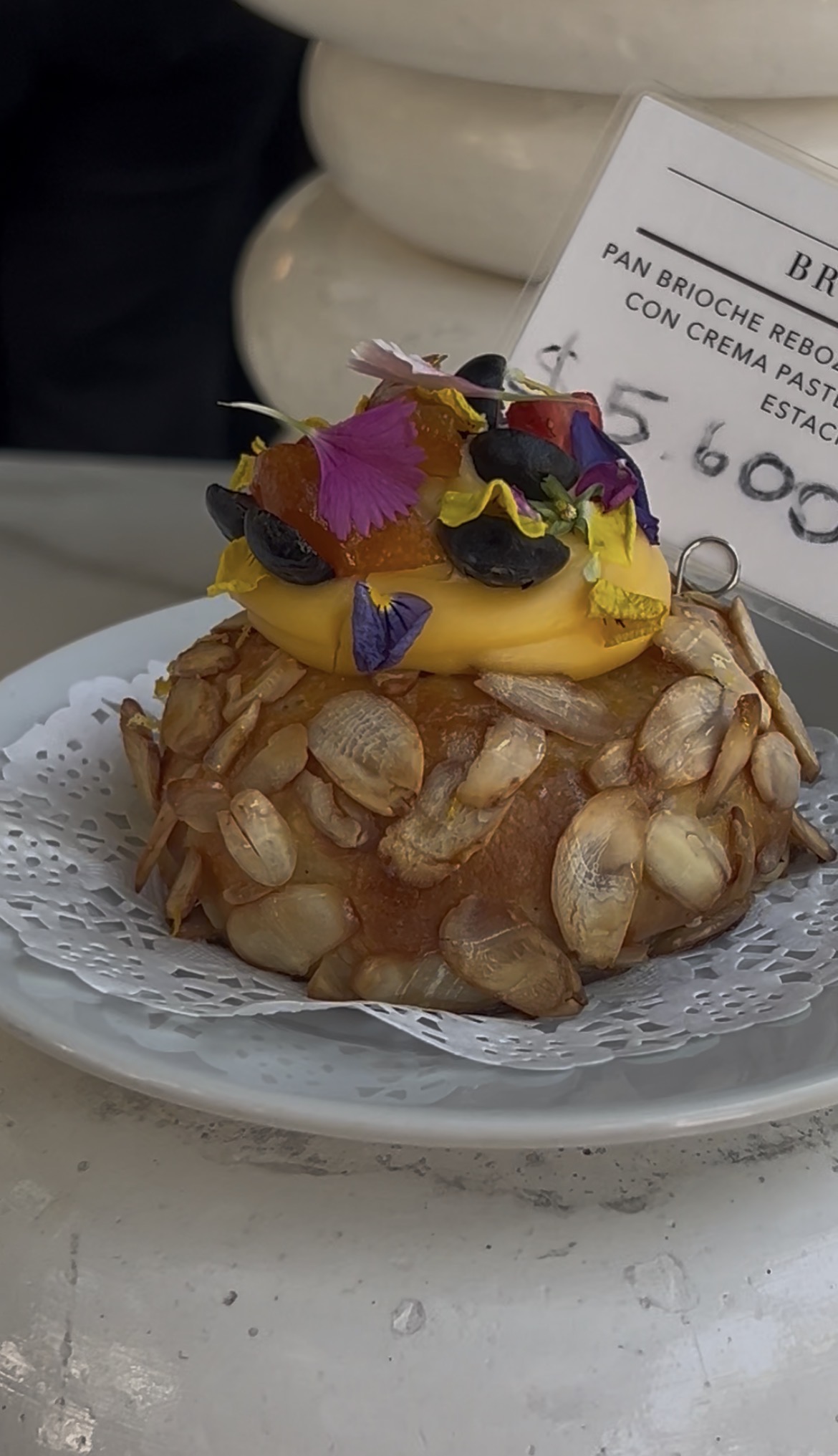
This became our go-to café for breakfast and lunch. The plant-filled open space feels like an urban garden hiding a day-and-night restaurant, with a wide range of savory dishes and pastries that were almost too pretty to eat. My partner gave the coffee a 10/10, which in our household is a serious endorsement.
View this post on Instagram
Cuervo Café
Now this…THIS is coffee. There are multiple locations throughout the city, but the one located in Palermo was situated on a street lined with boutiques, restaurants, and art. It was perfect for people watching and really absorbing what life would be like if I actually entertained my thoughts of moving to Buenos Aires. (Should I…move here?)

Rita Specialty Coffee
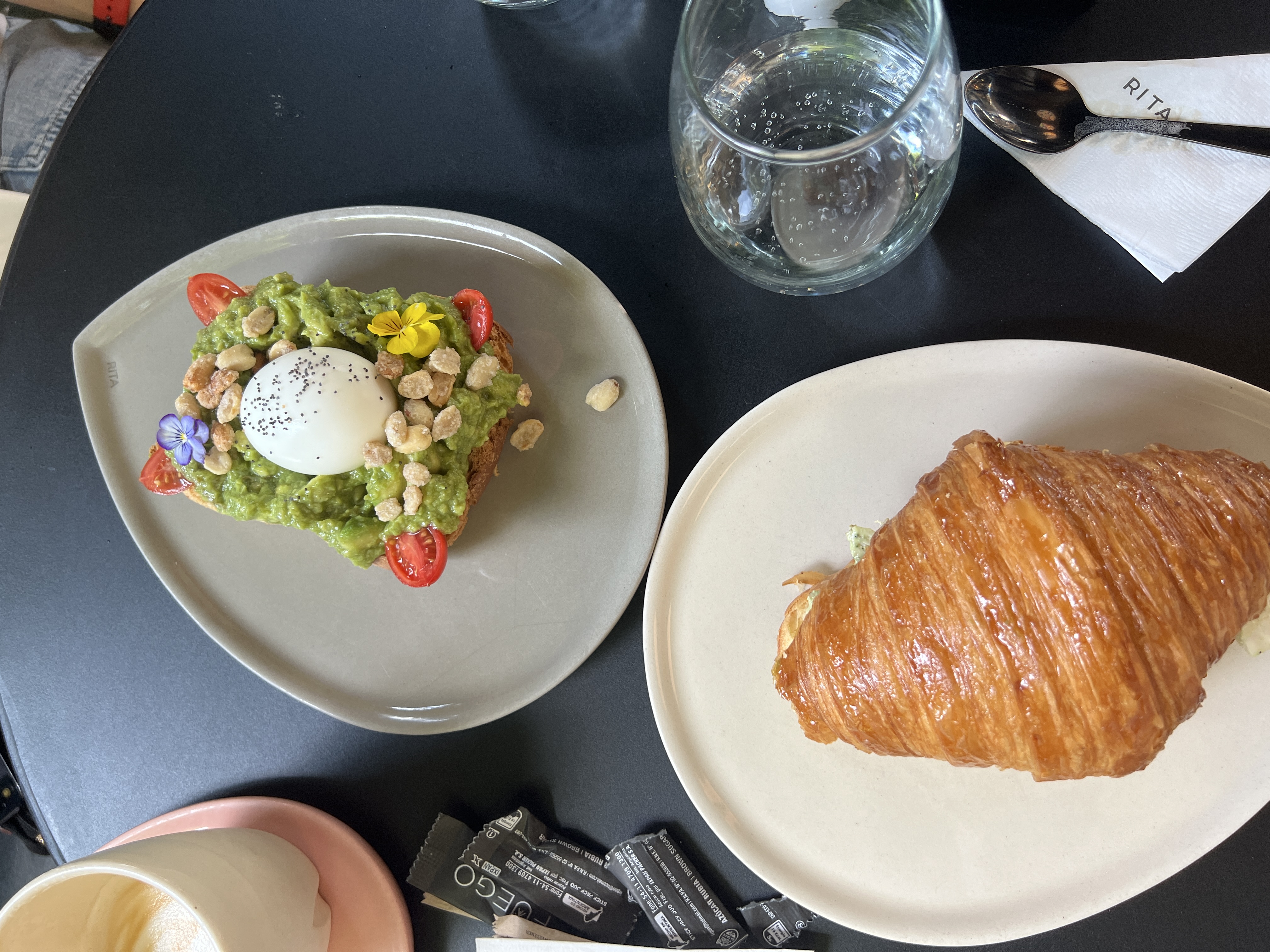
Rita has multiple locations throughout the city, but our favorite was in Palermo. The coffee was smooth (another 10/10) and the menu offered creative dishes and pastries. It was hard to decide what to order, so we visited multiple times. The space is creative and modern.
Meme Coffee
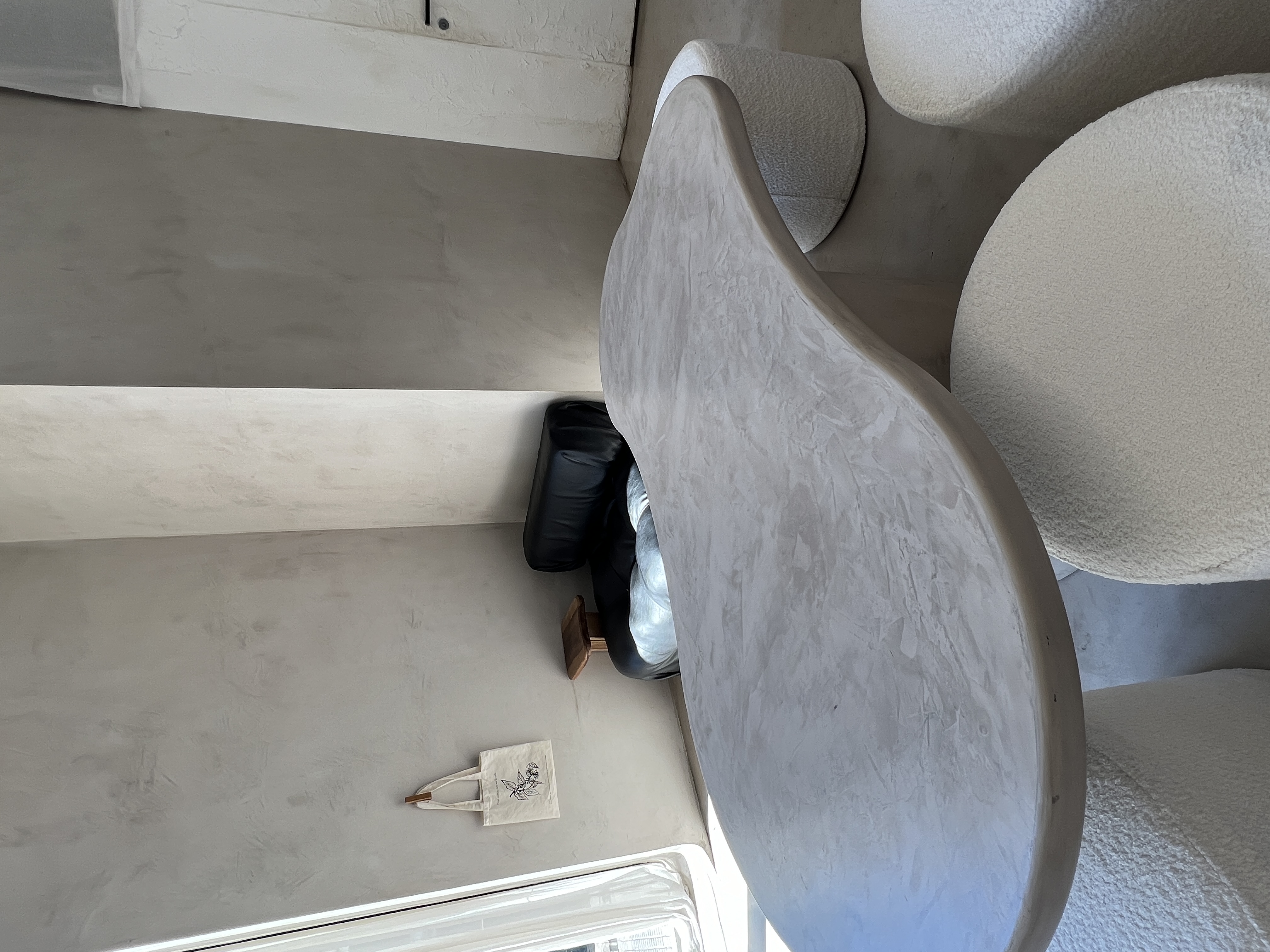
Meme is for the minimalist aesthetic coffee enthusiast. The space is smaller than what appears on many social media posts, but it is honestly one of the hippest spaces to enjoy lattes and chill.
Jardín Botánico Carlos Thays
Tucked just off the busy avenues of Palermo, the Jardín Botánico Carlos Thays feels like a pause button inside the city. Designed by French-Argentine landscape architect Carlos Thays in the late 19th century, the garden reflects the same European influence seen throughout Buenos Aires.
After days of walking city blocks and café hopping, this was where we stopped moving for a bit. No agenda. Just sitting and watching and listening the many birds, including parrots, that inhabit the park.
View this post on Instagram
CoChinChina
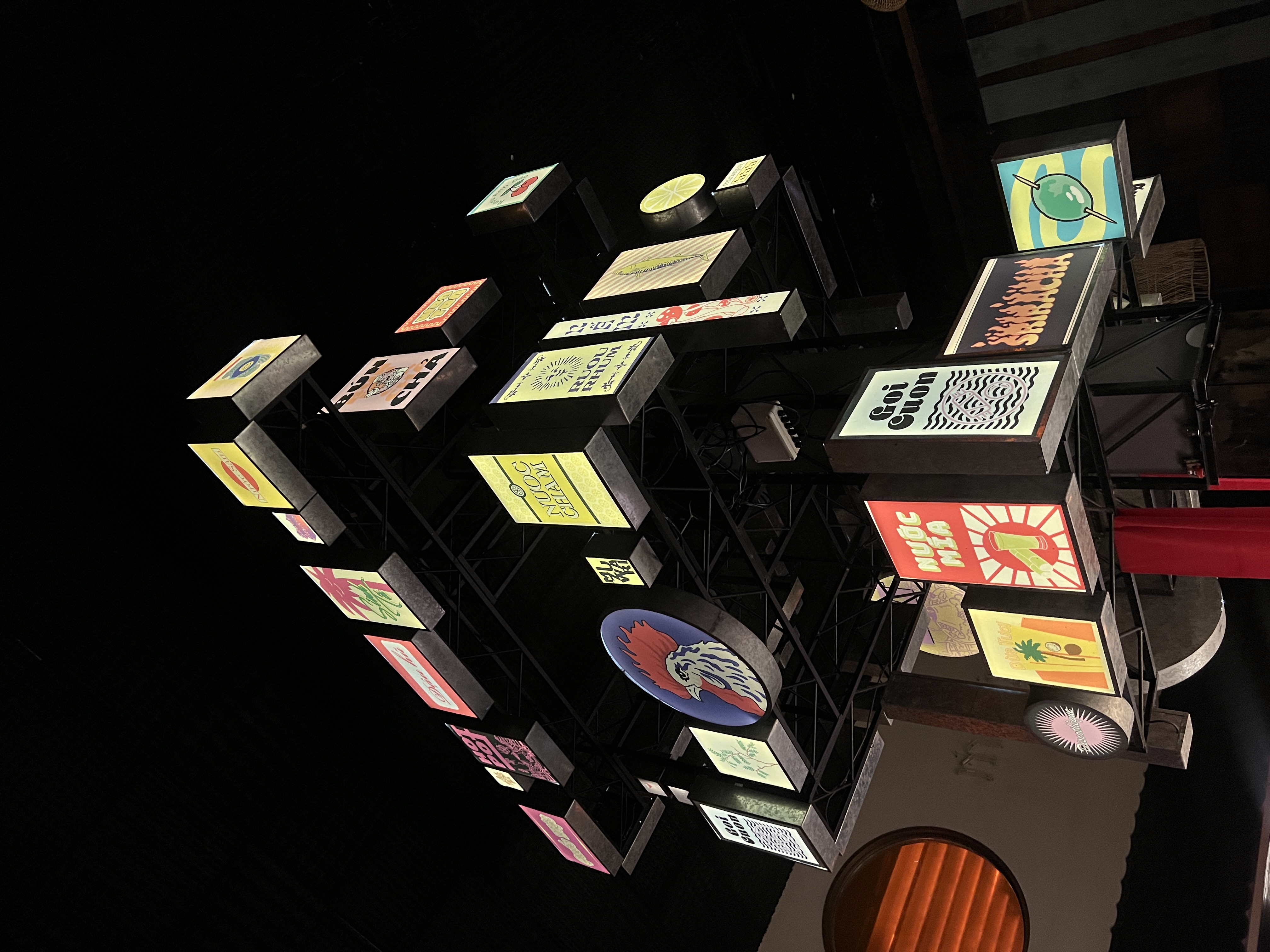
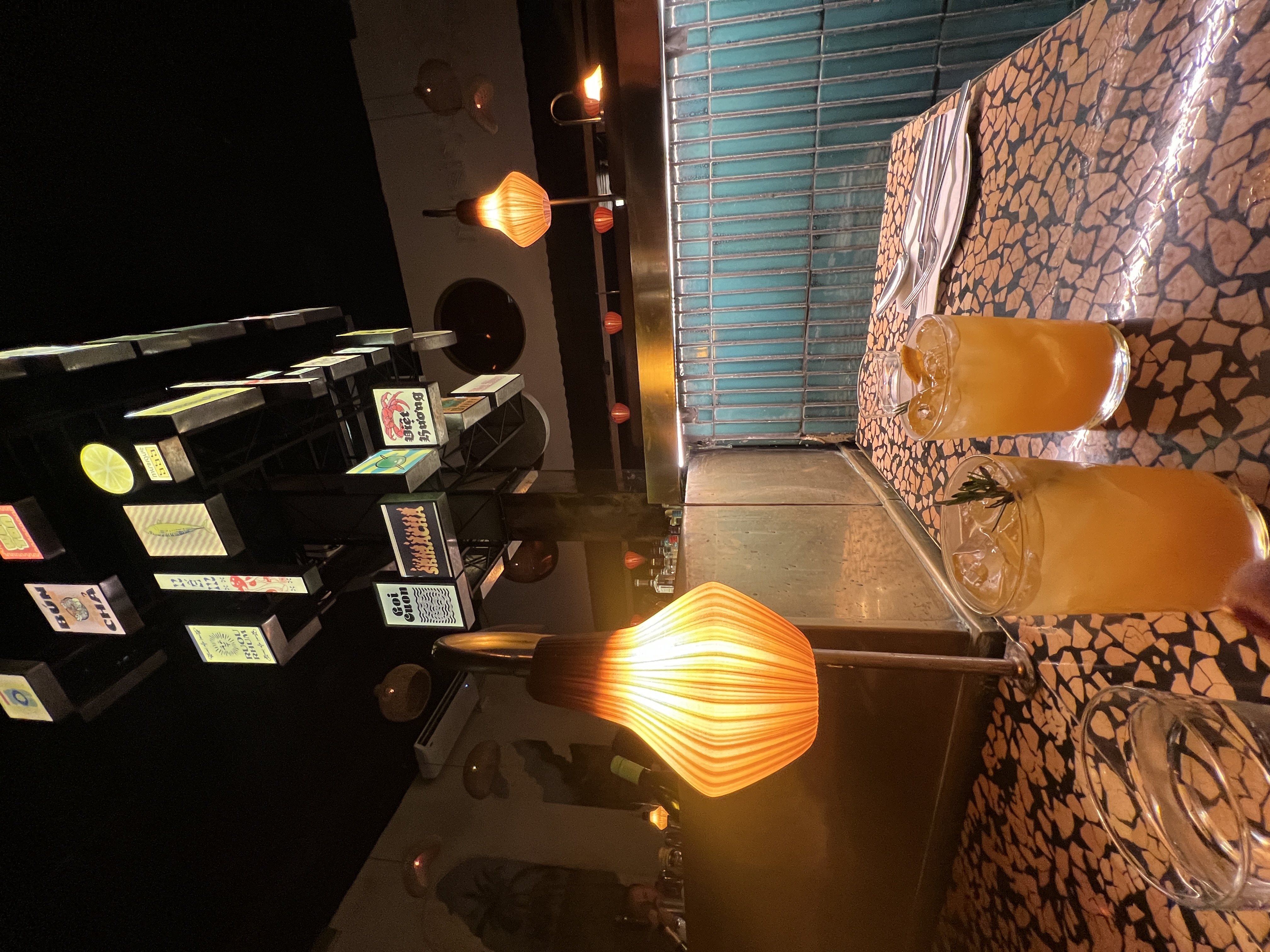
CoChinChina is not traditional Argentine food, but it’s a great example of how diverse and globally fluent Buenos Aires’ culinary scene is. I’m easily drawn into restaurants if they have interesting decor and a DJ (which this had both). But the experience was so much more than that, which is a good thing because I sometimes feel underwhelmed by foods that focus more on style than substance. That was not the case here. The menu blends French and Vietnamese influences with a clear Argentine point of view.
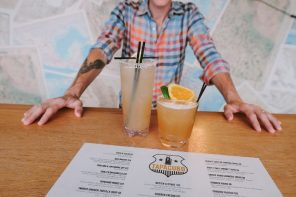
I ordered mocktails and didn’t feel like I was missing out at all, which says a lot in a city known for cocktails. It’s easy to see why CoChinChina has been named one of the World’s 50 Best Bars. Buenos Aires doesn’t just do classic well. It holds its own alongside other global food cities in ways that feel confident and fully its own.
Maricafé and Bookstore
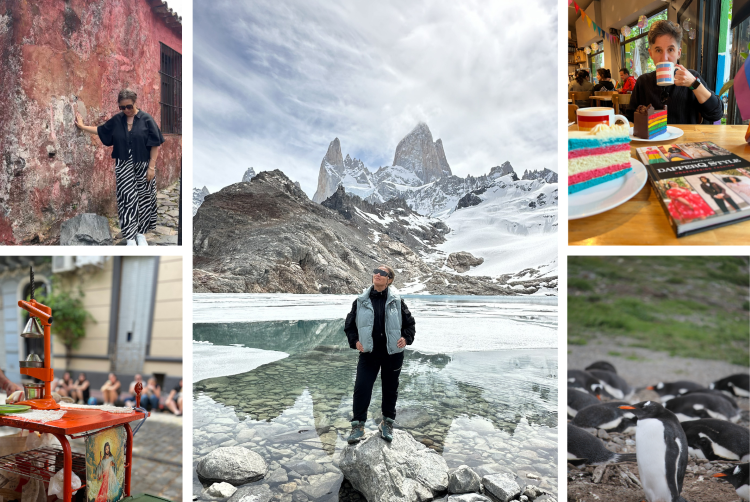
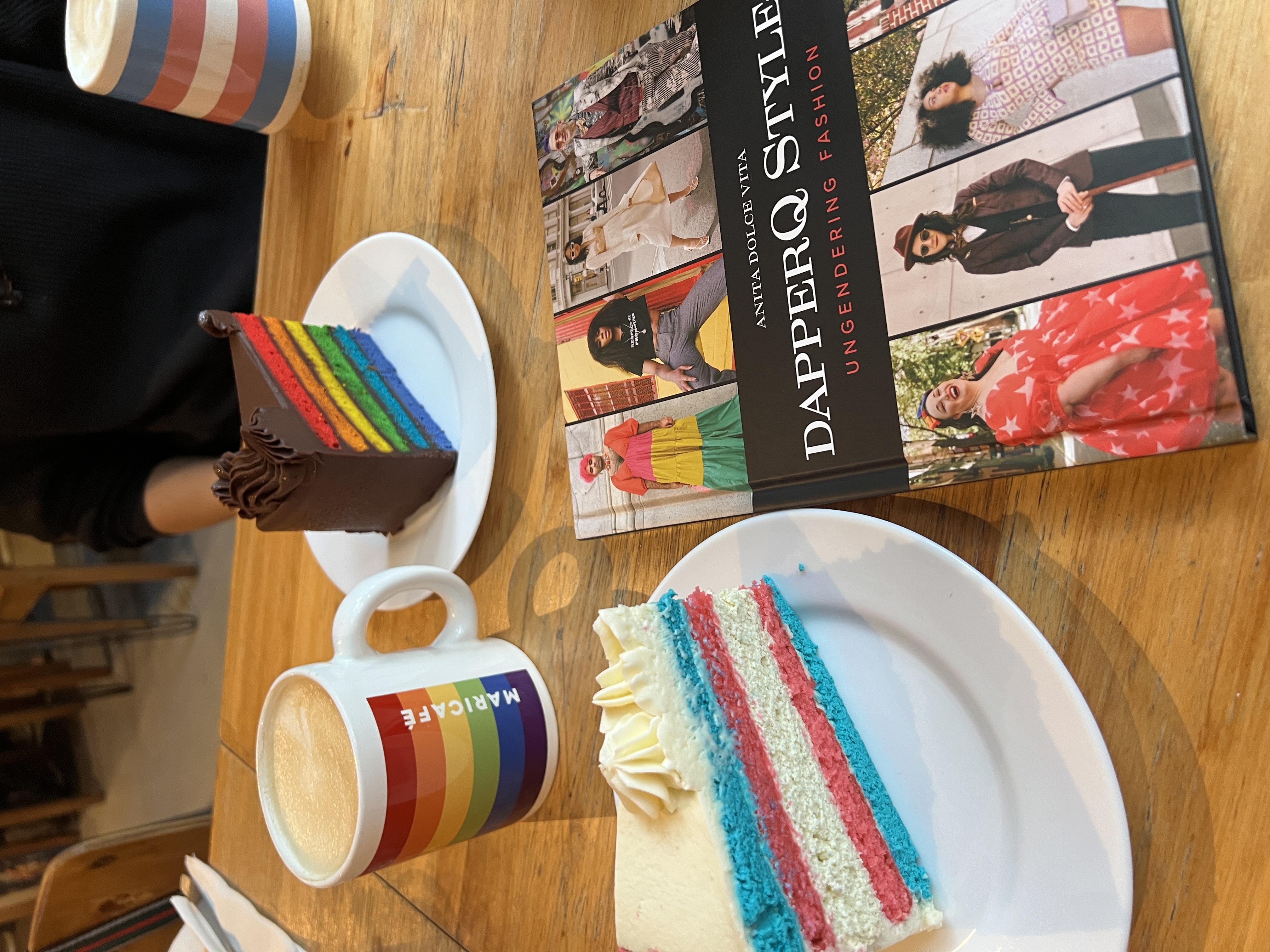
More than a café, Maricafé is a cultural anchor. Queer literature, drag performances, and community are the focus here. Seeing dapperQ’s book on the shelves here was so meaningful to me, knowing that the fashion, models, and voices in the publication are part of a global conversation and an archive of LGBTQ+ history.
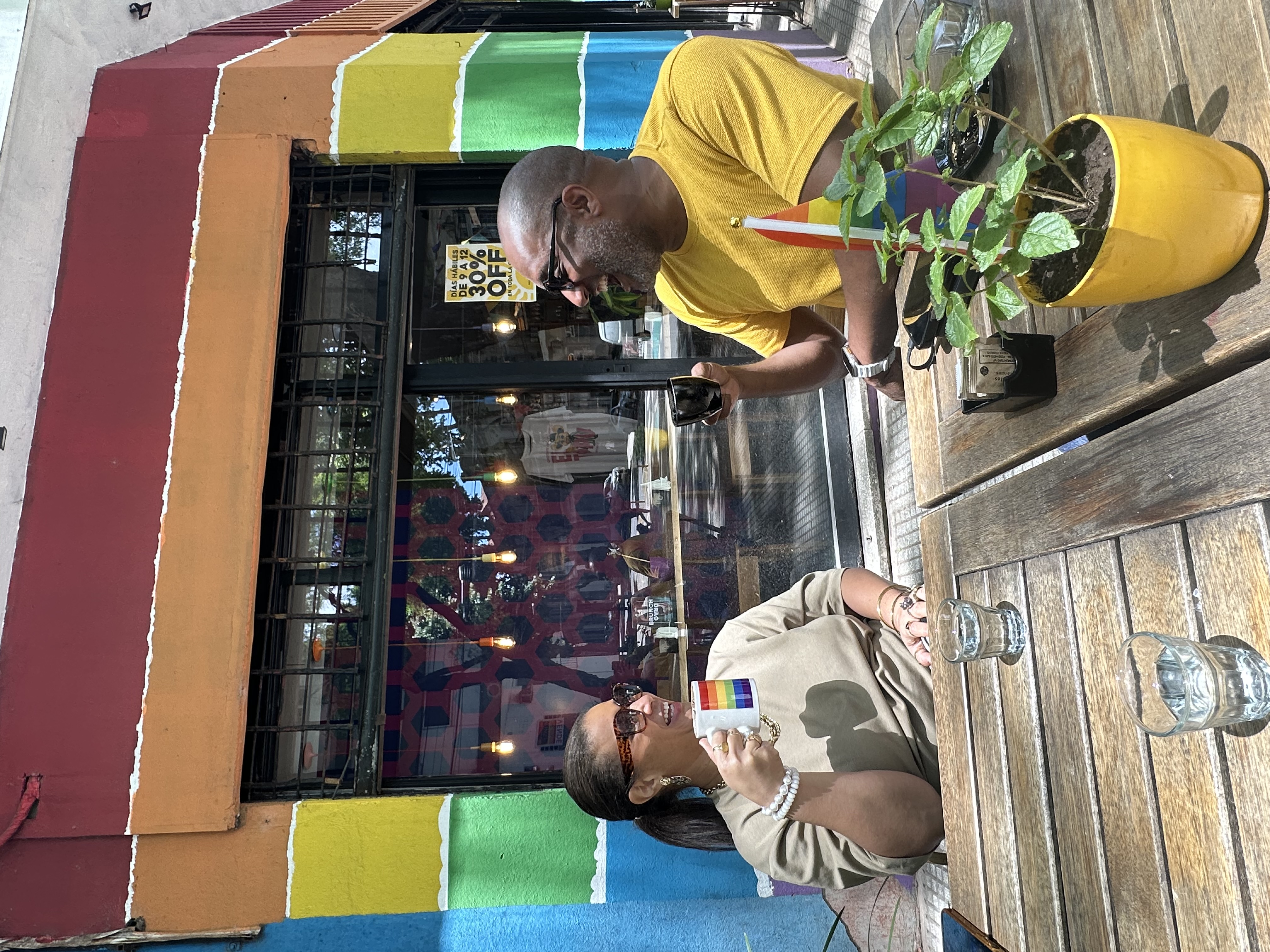
Exploring San Telmo
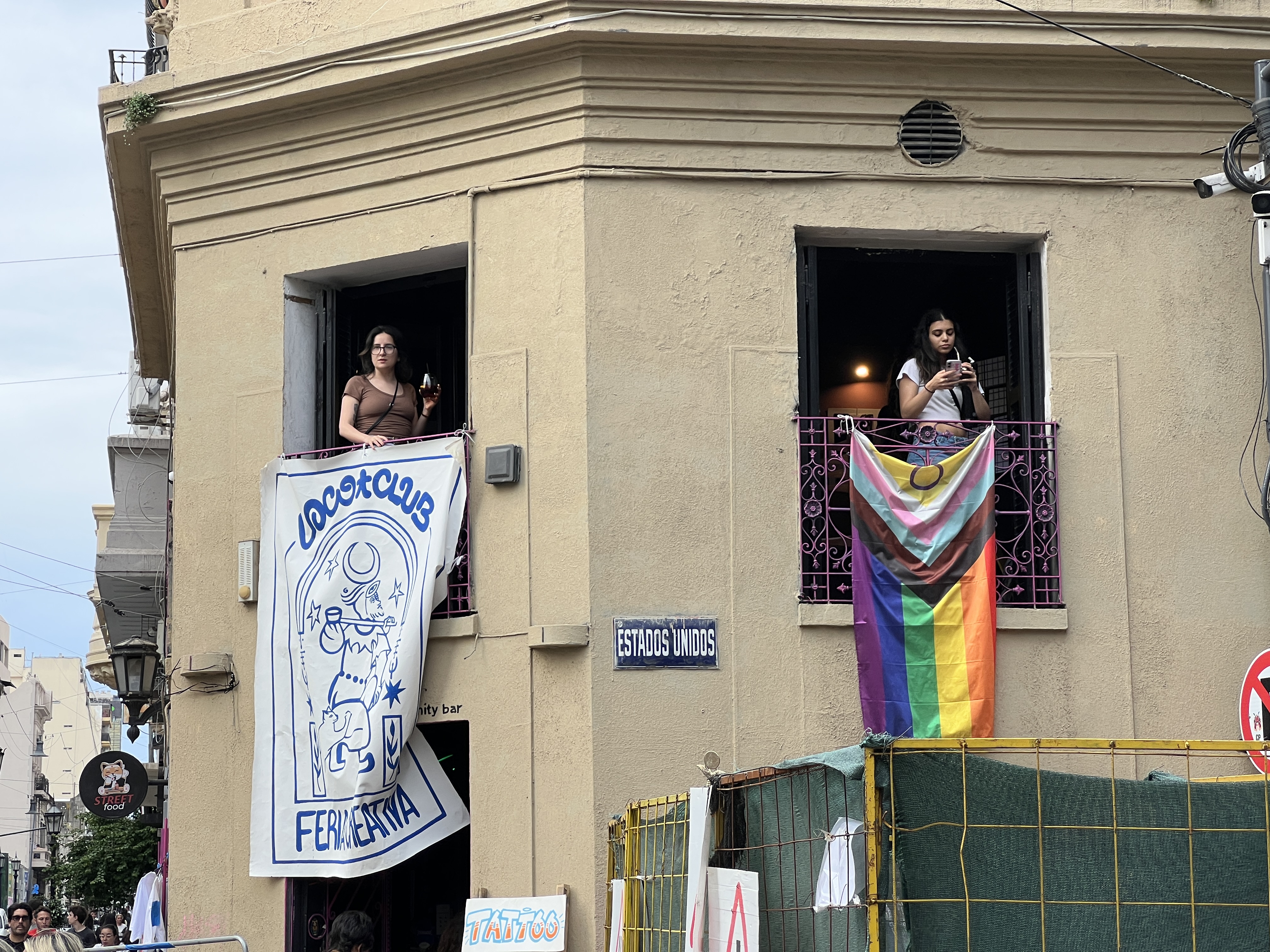
San Telmo isn’t a neighborhood you rush through. It rewards wandering, doubling back, and following whatever catches your attention in the moment. We spent time here doing exactly that, with no real plan beyond eating, browsing, and taking breaks when we felt like it. And what we found were multiple LGBTQ bars, parties, and flags flying proudly.
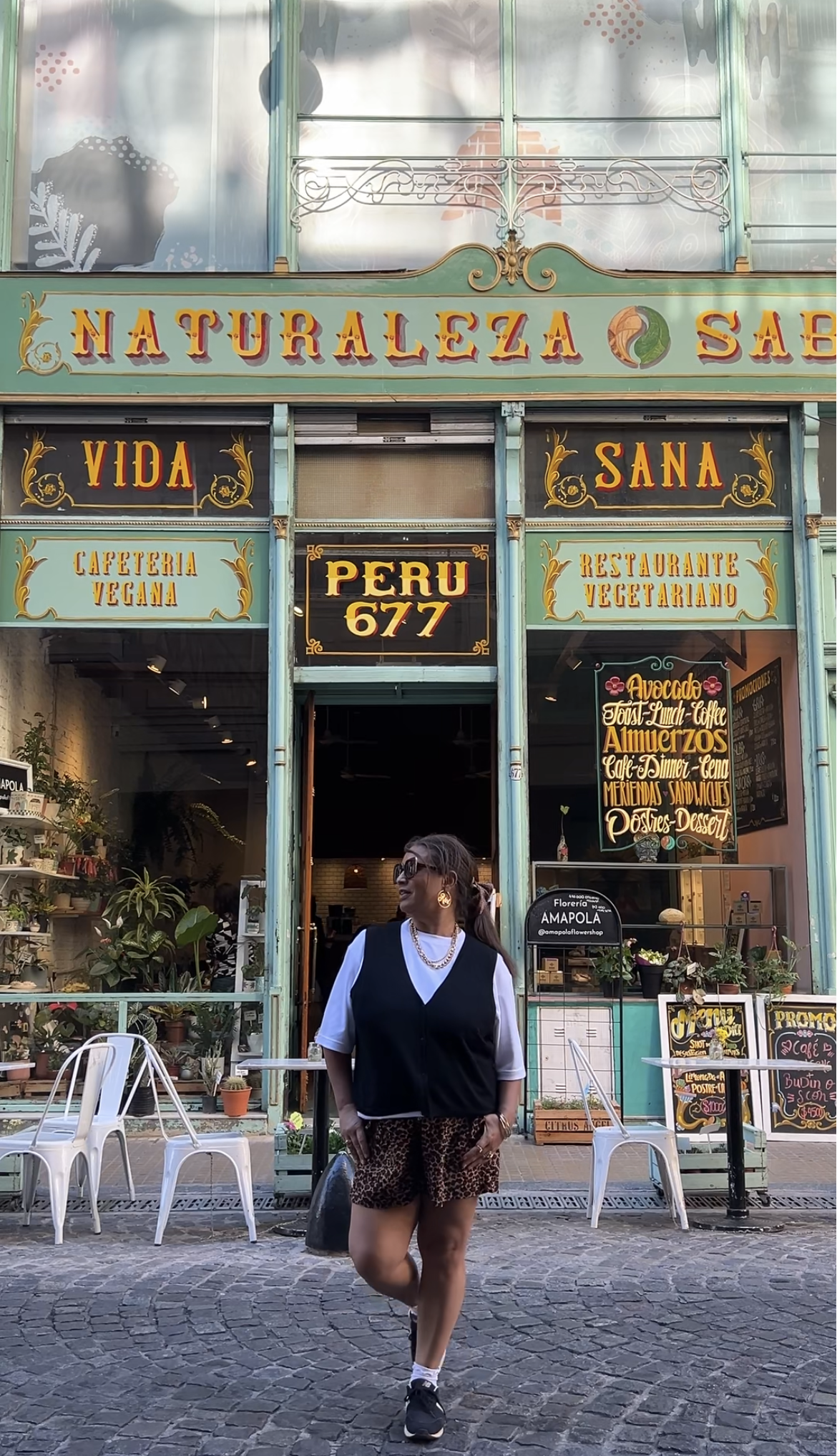
Mercado de San Telmo
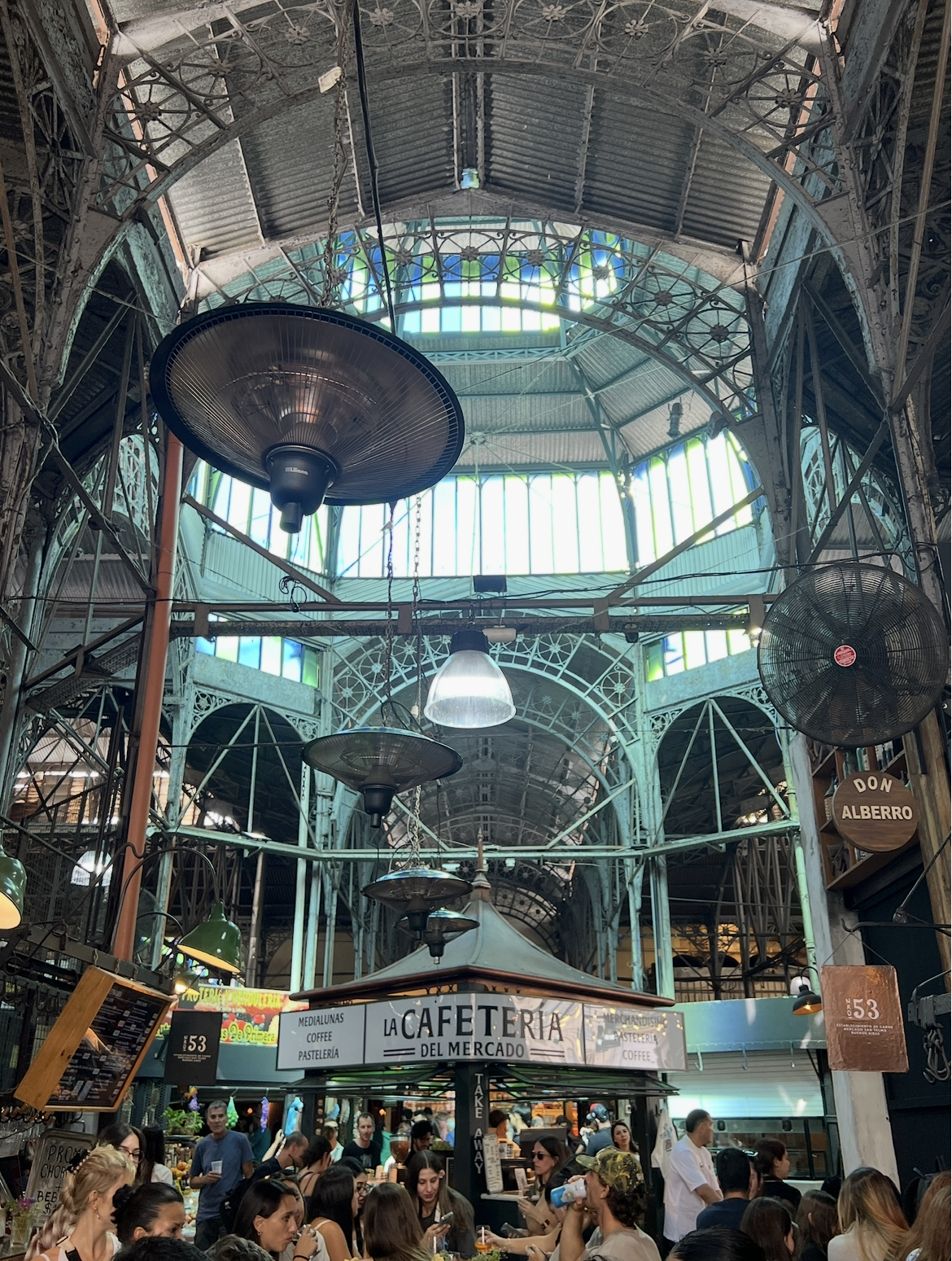
Shopping and eating inside the San Telmo Market is part of understanding the neighborhood. The market is loud and busy, with food stalls, small restaurants, antique vendors, and specialty shops all packed together under one roof. We browsed without a list, stopped when something smelled good, and picked up small things we didn’t need but wanted anyway.
Rita Dinamita
While wandering the outdoor section of the market, I accidentally stumbled upon Rita Dinamita, which is the epitomie of city cool. The vibe here is relaxed and social, with femal DJs spinning while people drift in and out. I wish I had known of it sooner in my trip, because I would have included it for multiple afternoons/evenings in my itinerary.
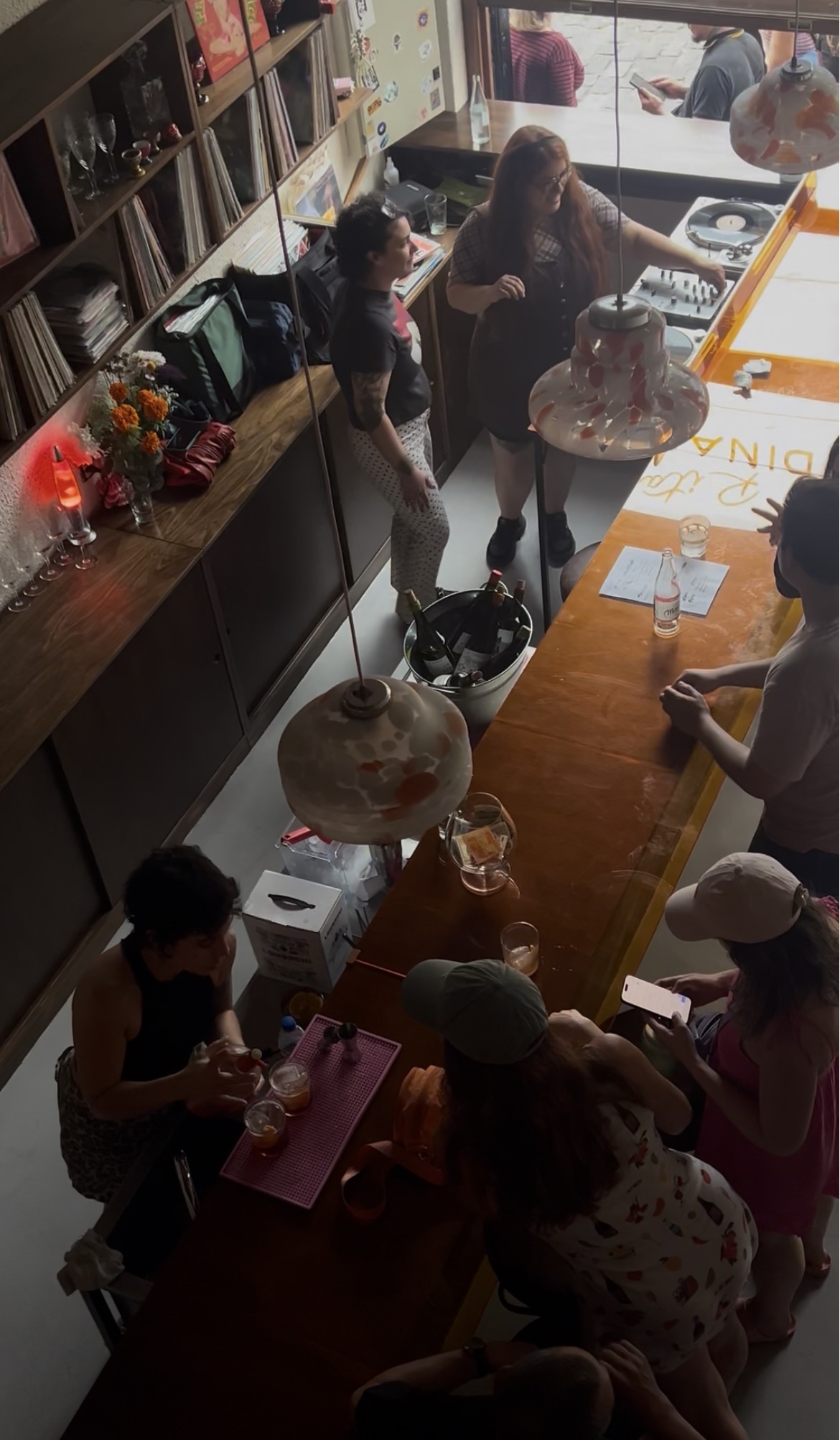
View this post on Instagram
Exploring Recoleta
Recoleta moves at a different pace. Wide avenues, historic residences, embassies, and a sense of composure define the neighborhood. This is where Buenos Aires’ European influence becomes most visible, particularly its Beaux-Arts architecture and deliberate symmetry.
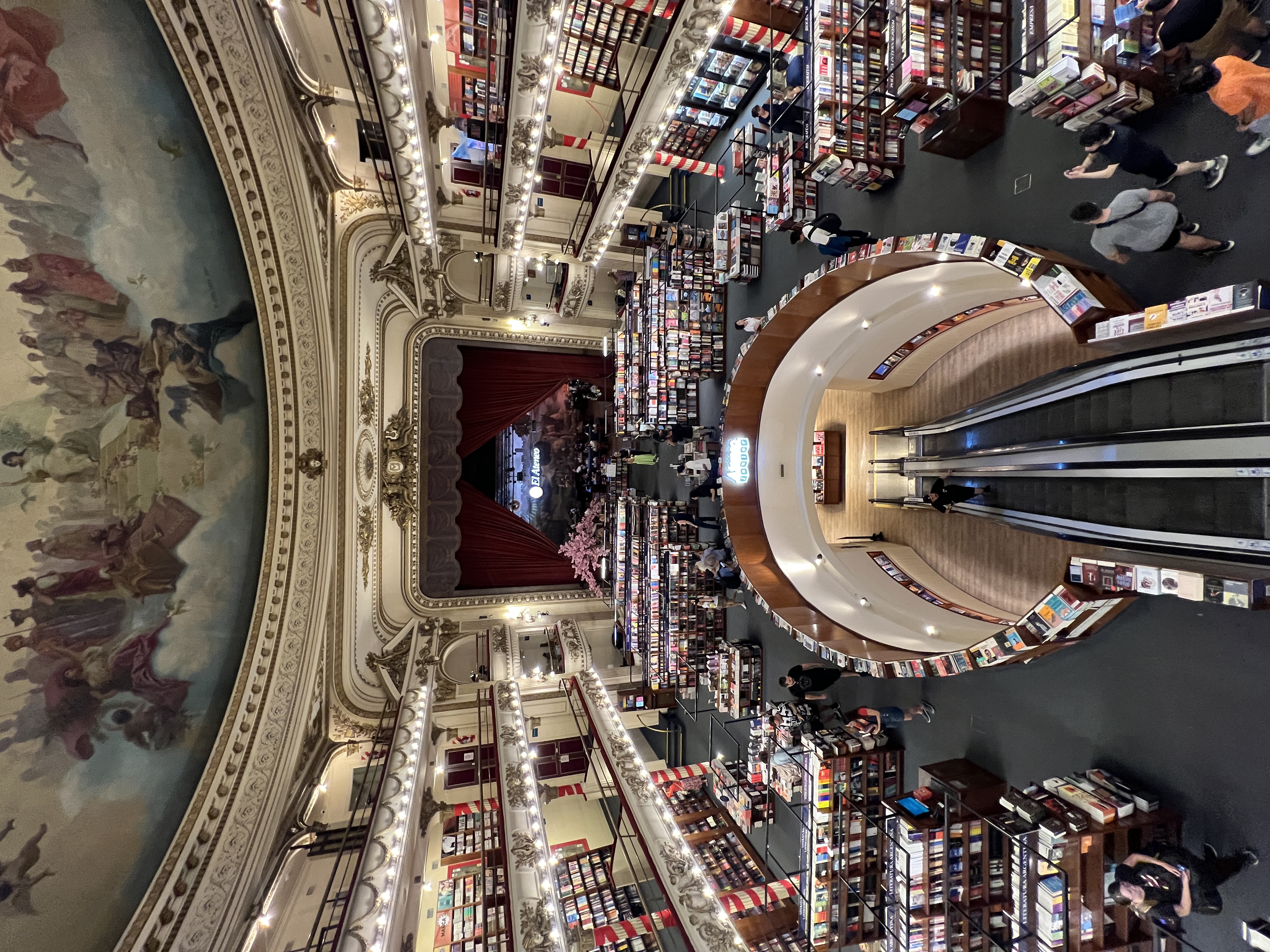
El Ateneo Grand Splendid
El Ateneo Grand Splendid lives up to its reputation. Housed in a former theater, complete with balconies and an ornate ceiling, it’s both visually stunning and fully functional.
Recoleta Cemetery
The Recoleta Cemetery is less somber than expected. Its elaborate mausoleums tell stories of power, legacy, and national identity. Walking through feels contemplative rather than heavy, especially when you take your time.
View this post on Instagram
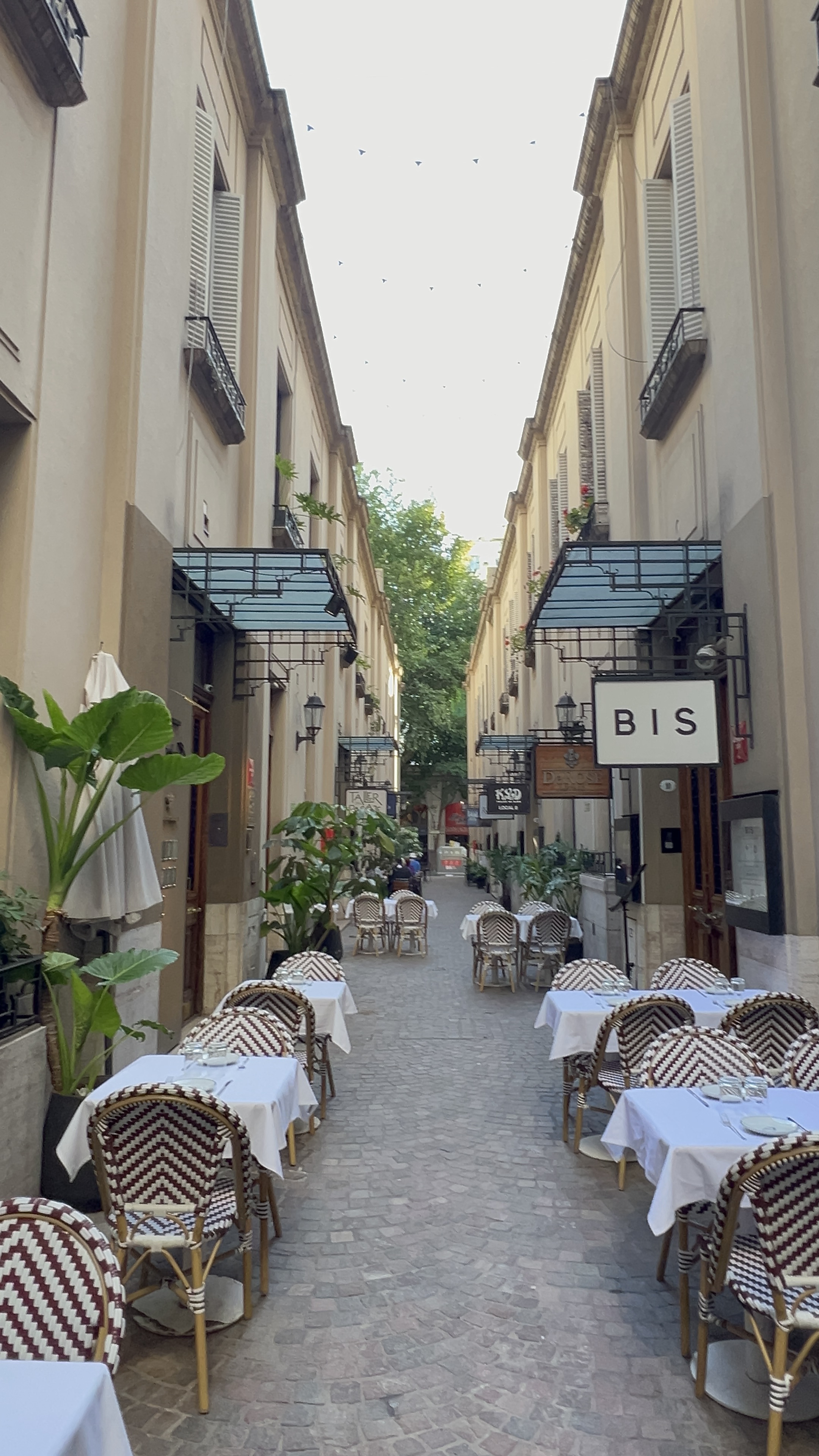
Recoleta Pasajes
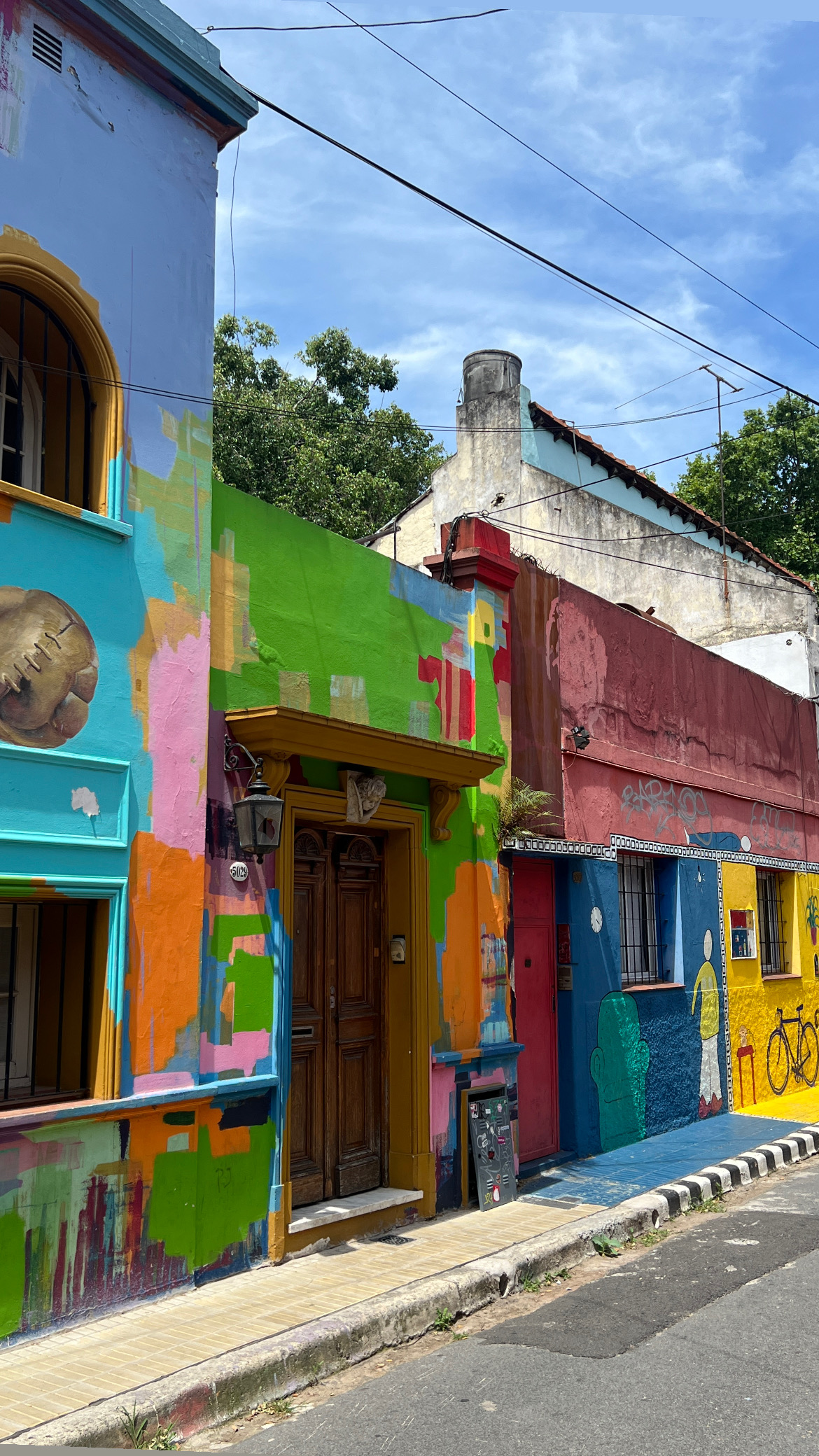
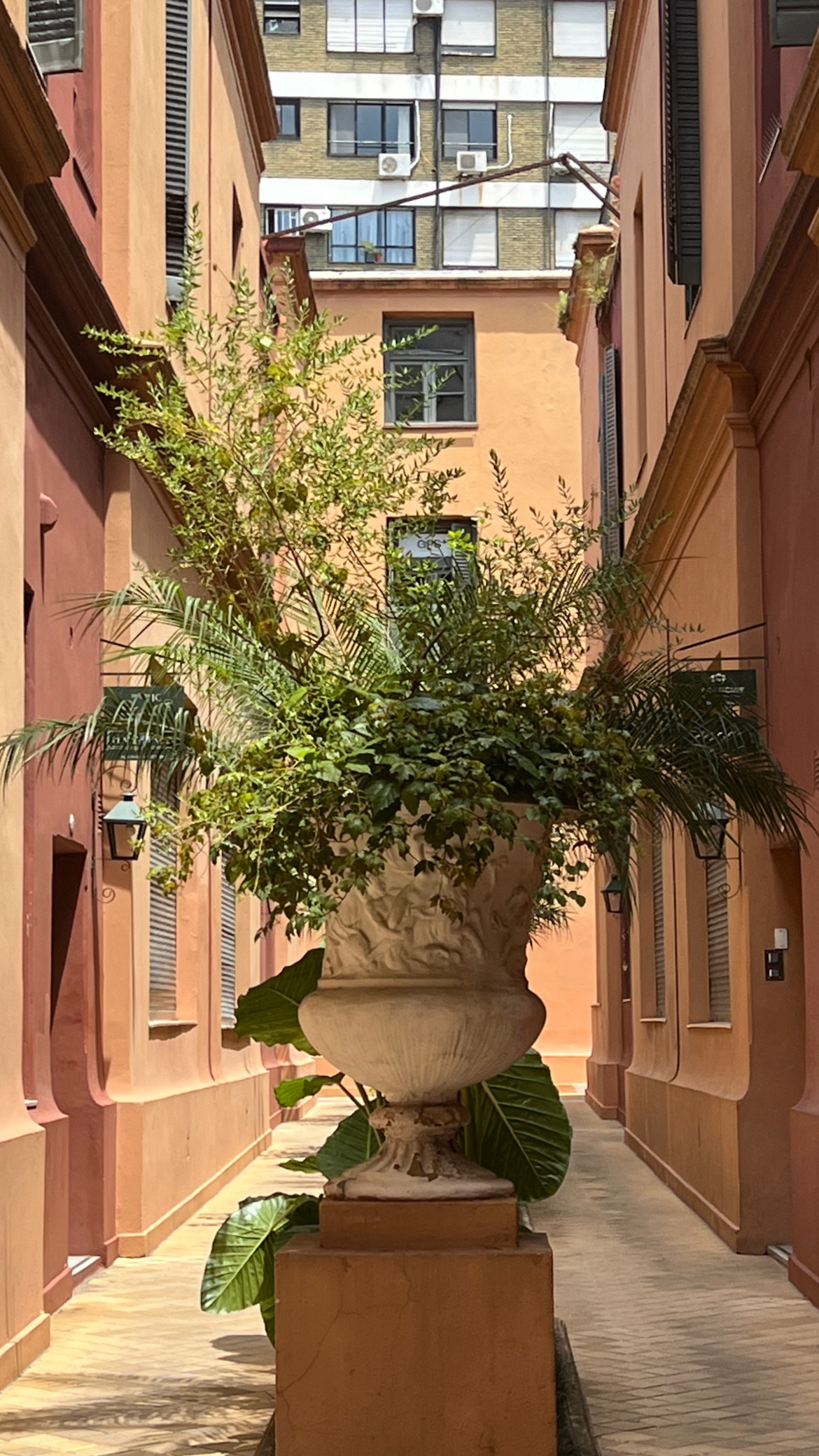
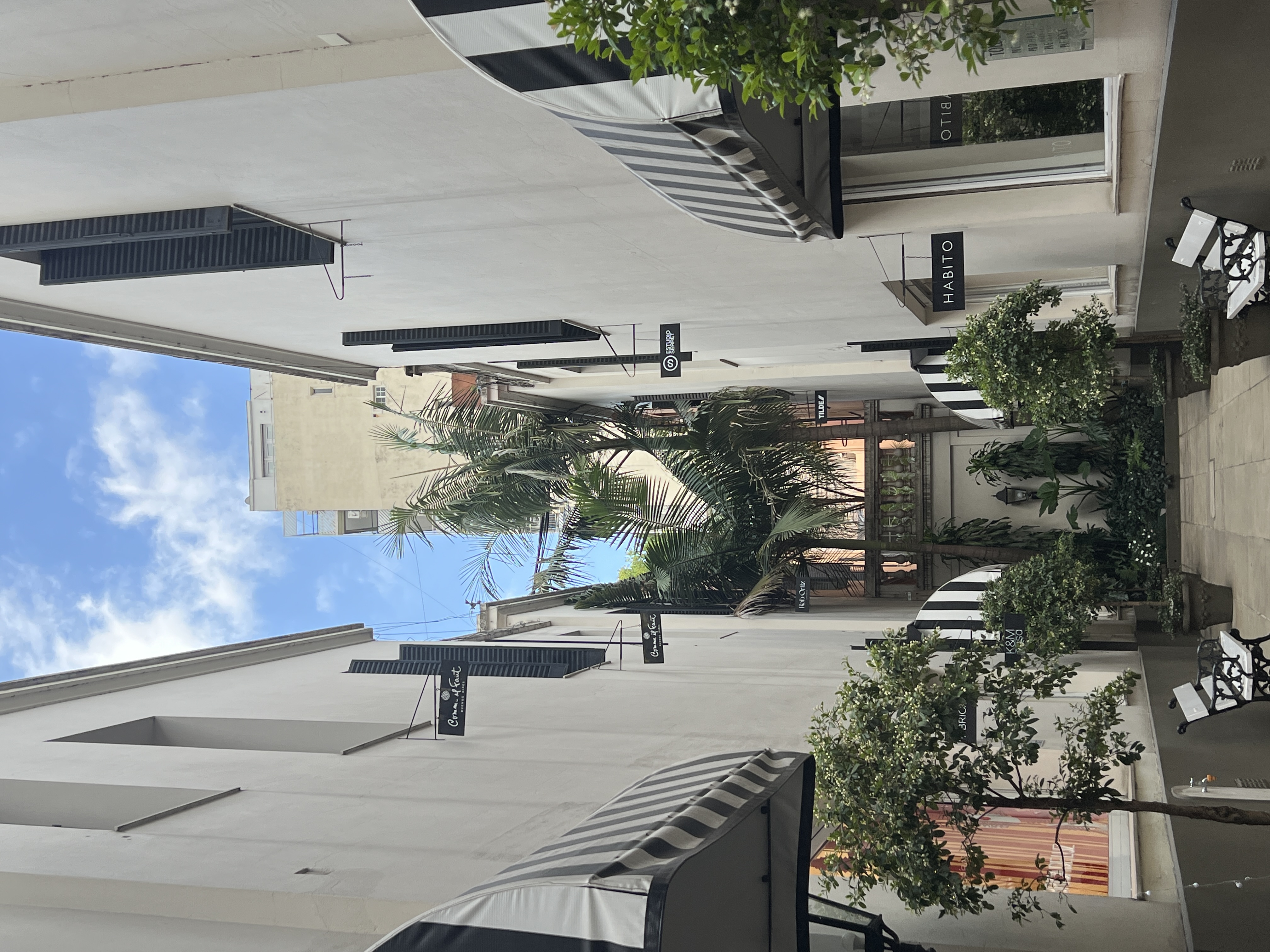
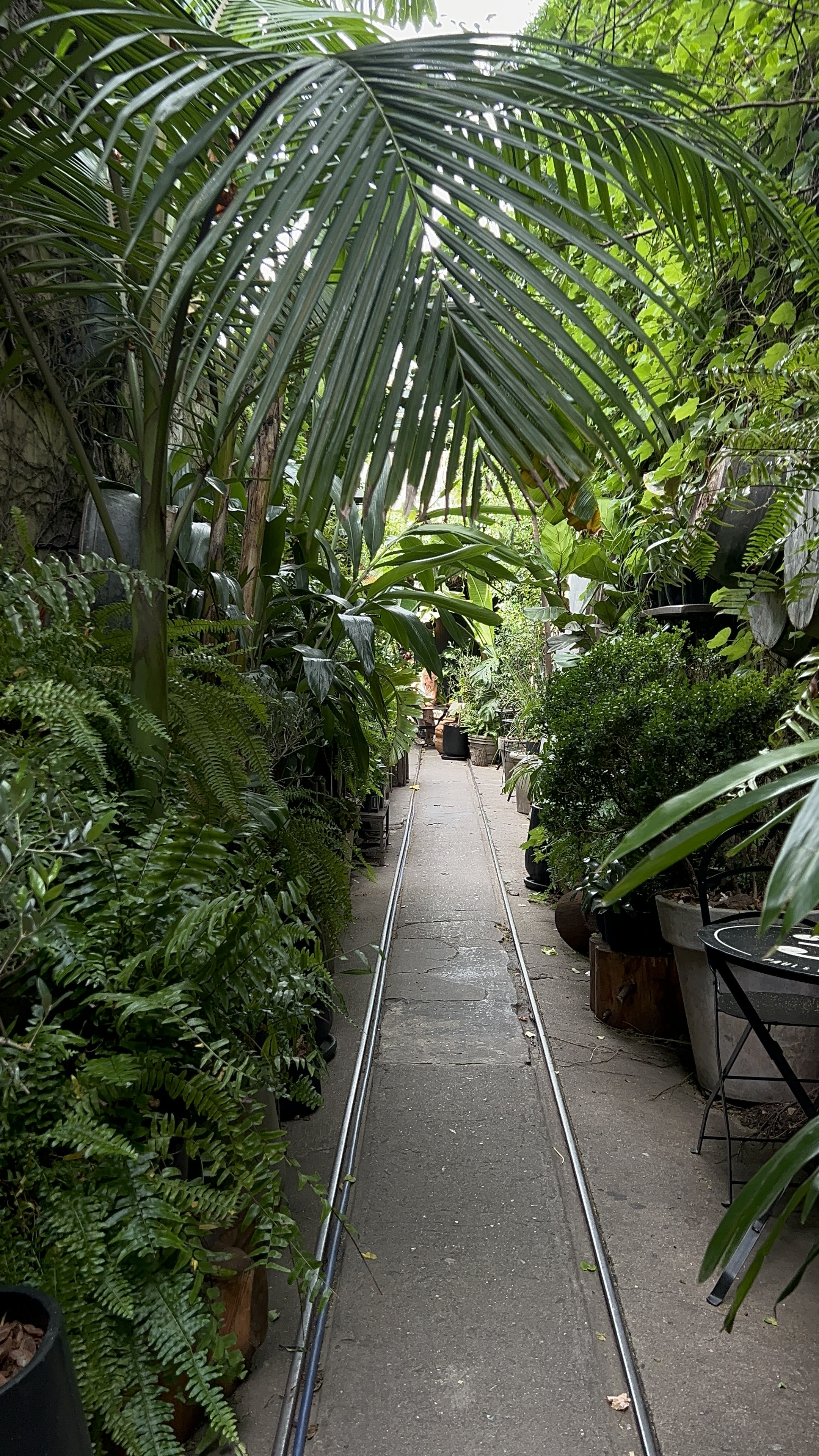
One of Recoleta’s quieter pleasures is discovering its pasajes, narrow pedestrian alleyways tucked between larger streets. Pasaje Suizo, French Paul Gallery, Pasaje Russel, Pasaje Libertad, and Rue des Artisans offer moments of stillness and a welcome shift in scale.
Florería Atlántico
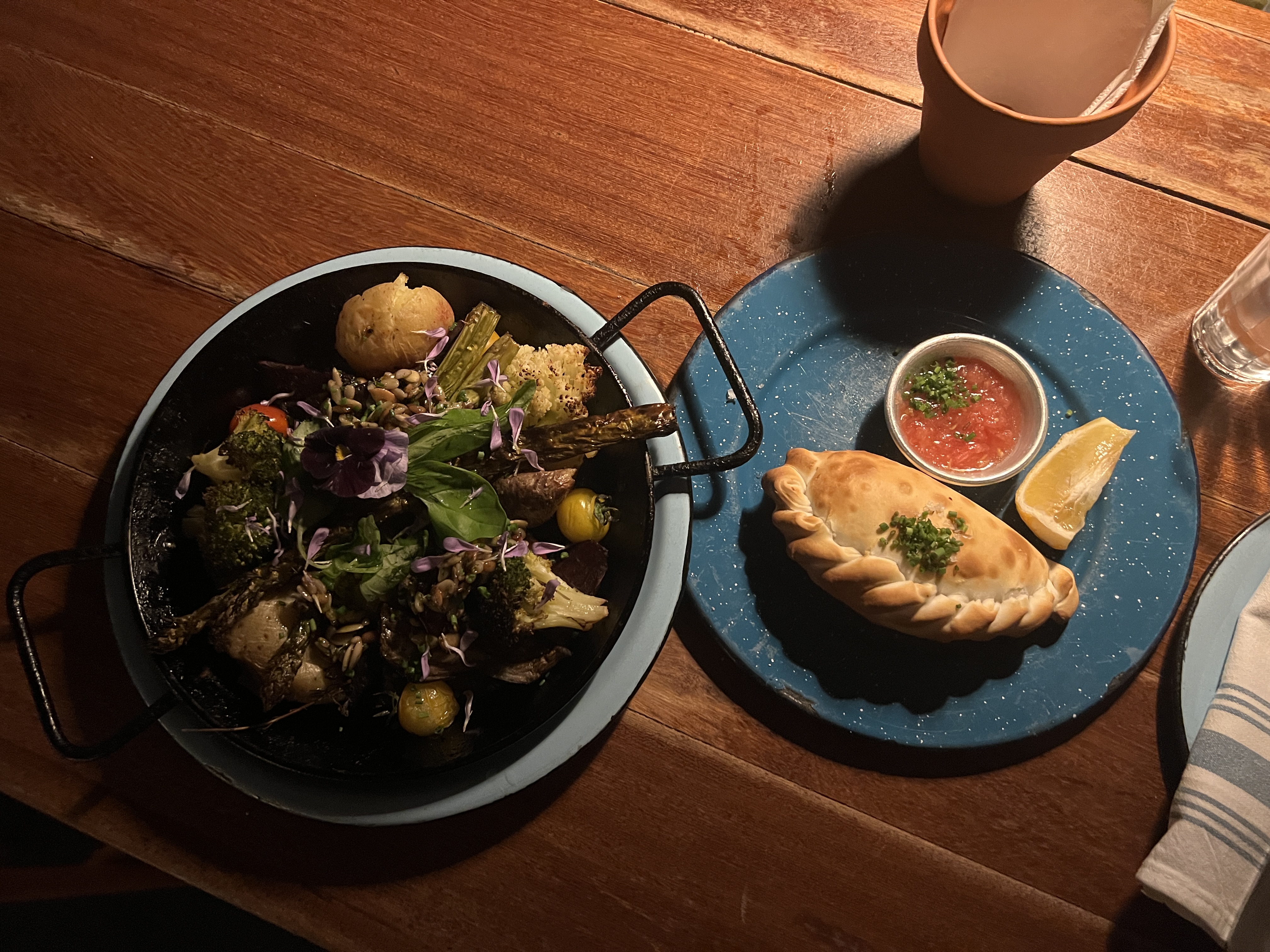
This restaurant has also received the prestigious 50 best bars in the world honor, but you have to find it first. Tucked under a flowershop, you would not know if was there …well except for this post and now all of the social media hype. But, despite its now viral online attention, it is more than just a trend. The food is absolutely delightful and the the crowd is unpretentious. The location is also perfection, located on one of the most beautiful Parisian-style streets in Buenos Aires: Calle Arroyo.

View this post on Instagram
Floralis Genérica
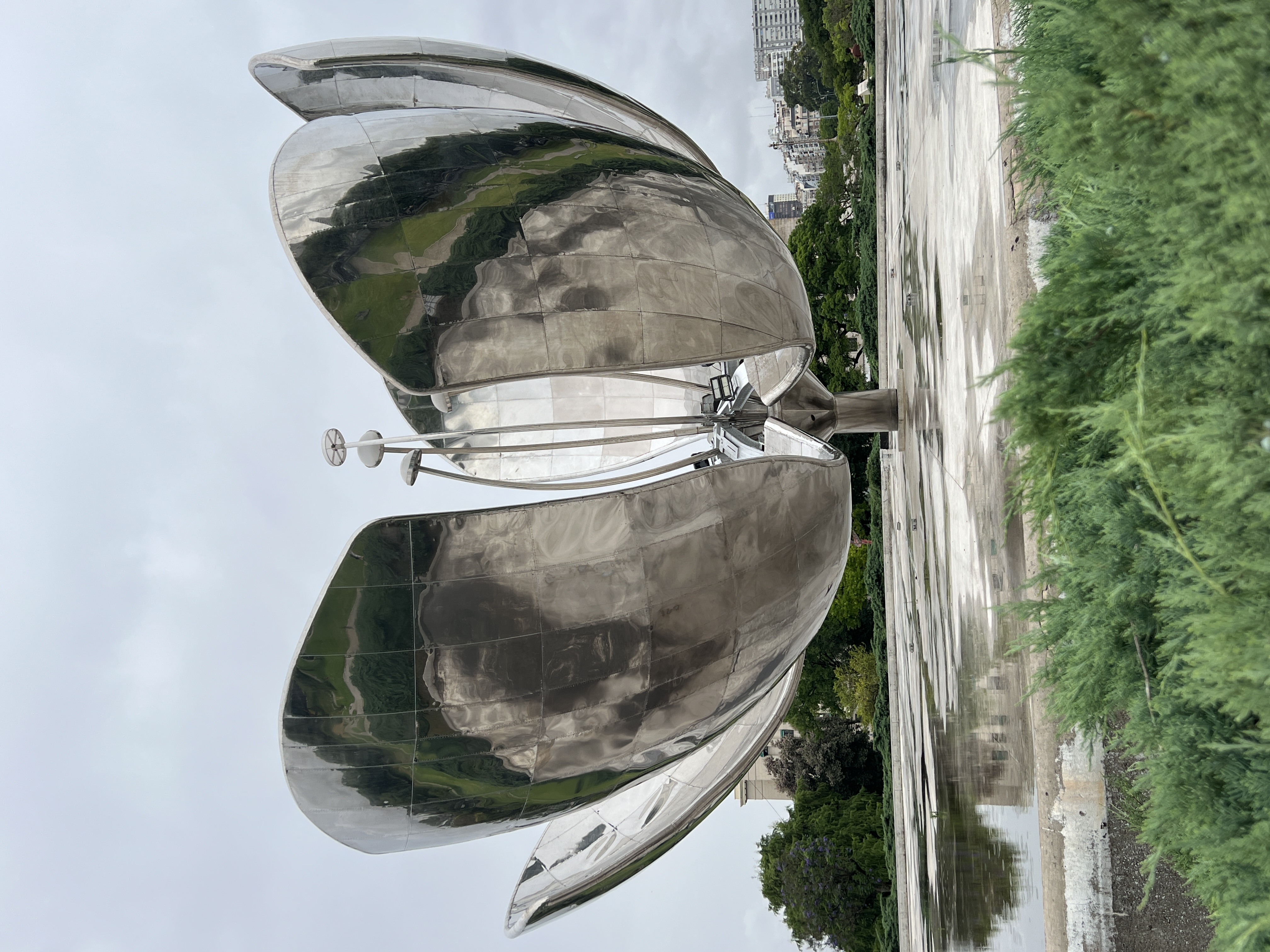
Floralis Genérica is one of those landmarks that feels both futuristic and historic. The massive metal flower sits in Plaza de las Naciones Unidas and opens and closes its petals depending on the time of day, powered by solar energy. It’s worth visiting at different times of day if you can, as the light completely changes how it’s experienced.
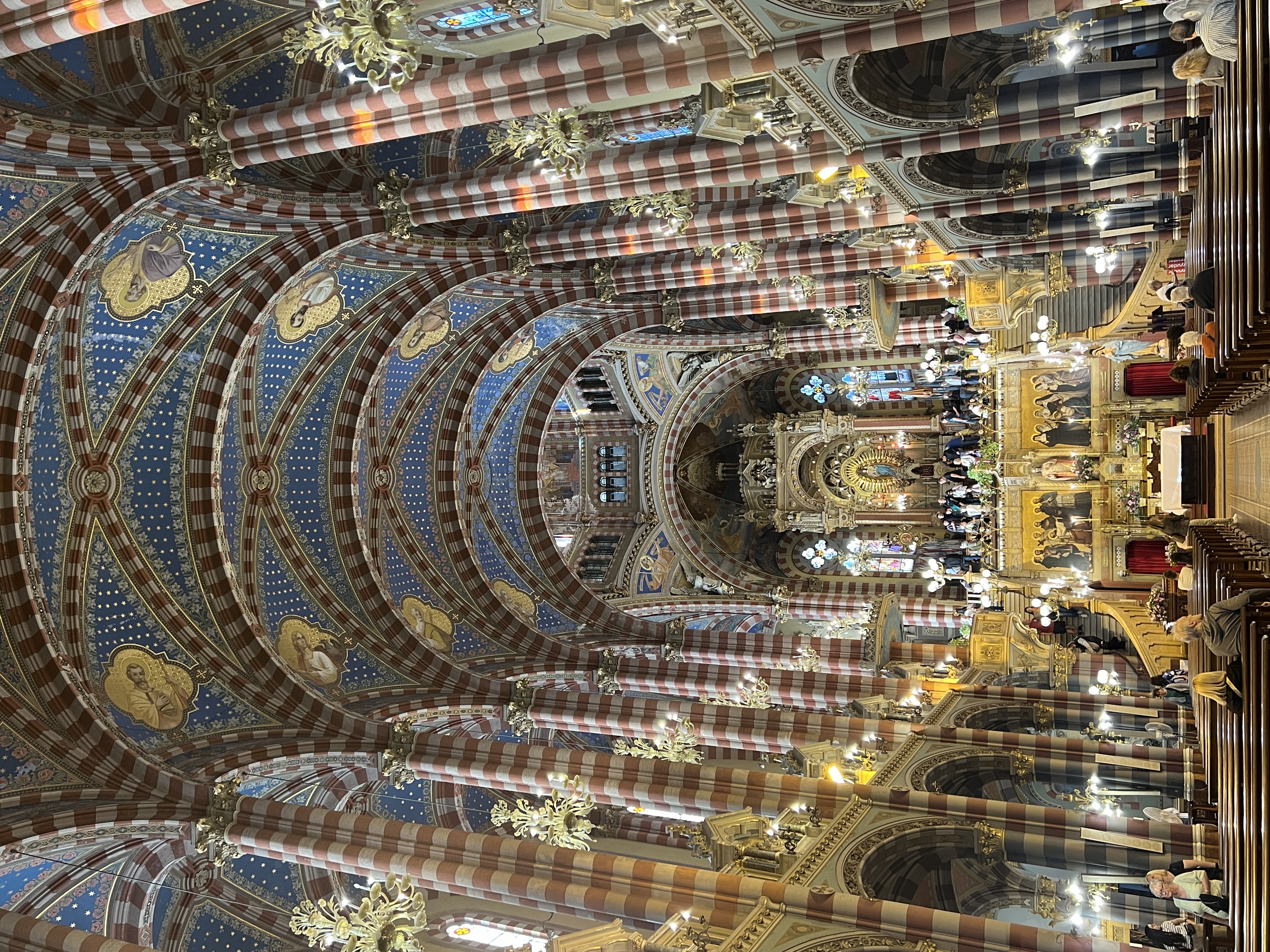
Basilica Maria Auxiliadora y San Carlos
While located in the Almagro neighborhood, this church is definitely worth including in your Recoleta (or Palermo) itinerary.
Exploring El Centro
Casa Rosada
Casa Rosada, the presidential palace, sits at Plaza de Mayo, a space long associated with protest, celebration, and collective memory. It’s instantly recognizable, but more importantly, it’s active. Standing here, you’re often sharing space with demonstrations, tourists, and locals moving through their day.

Obelisco
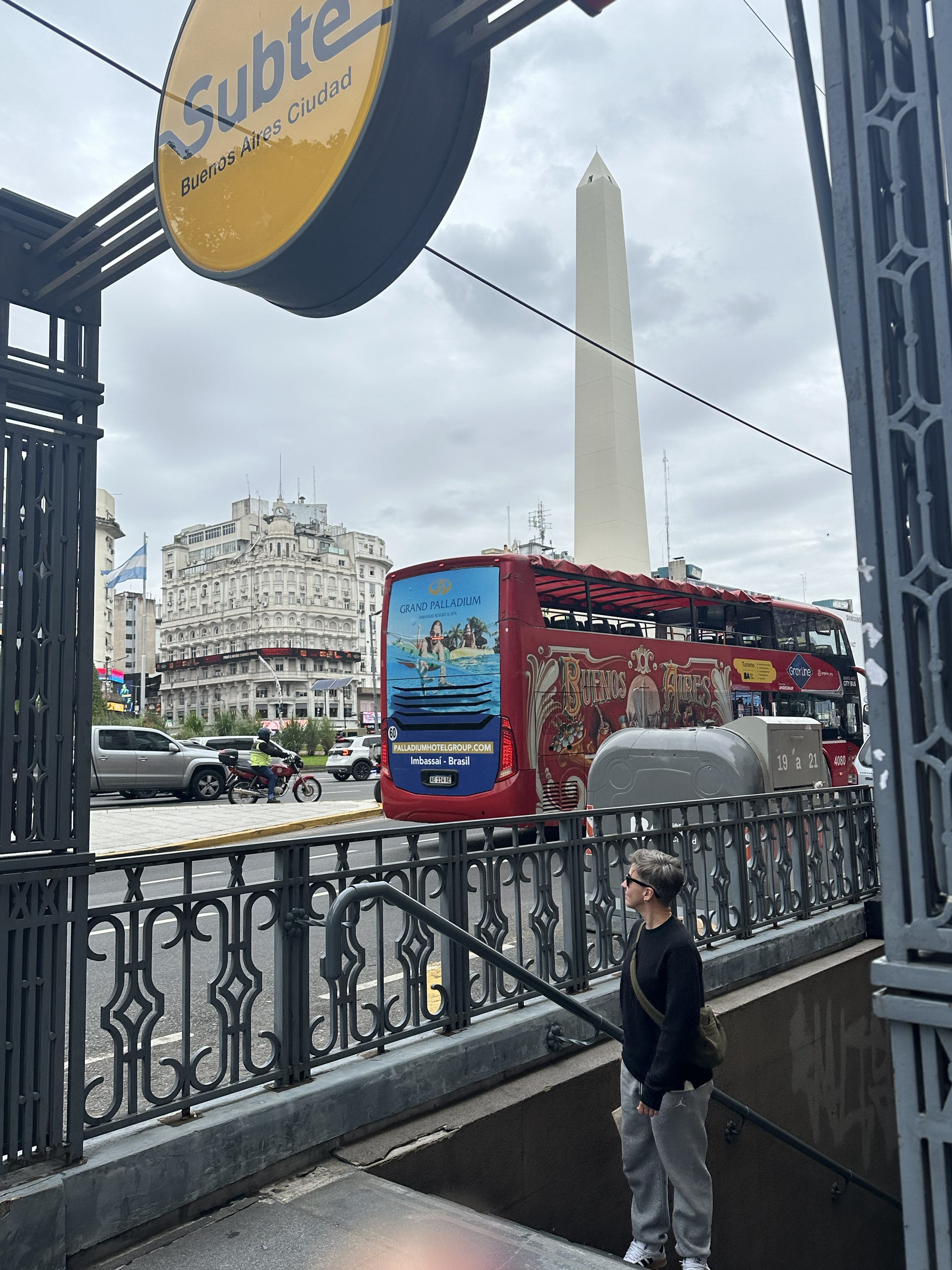
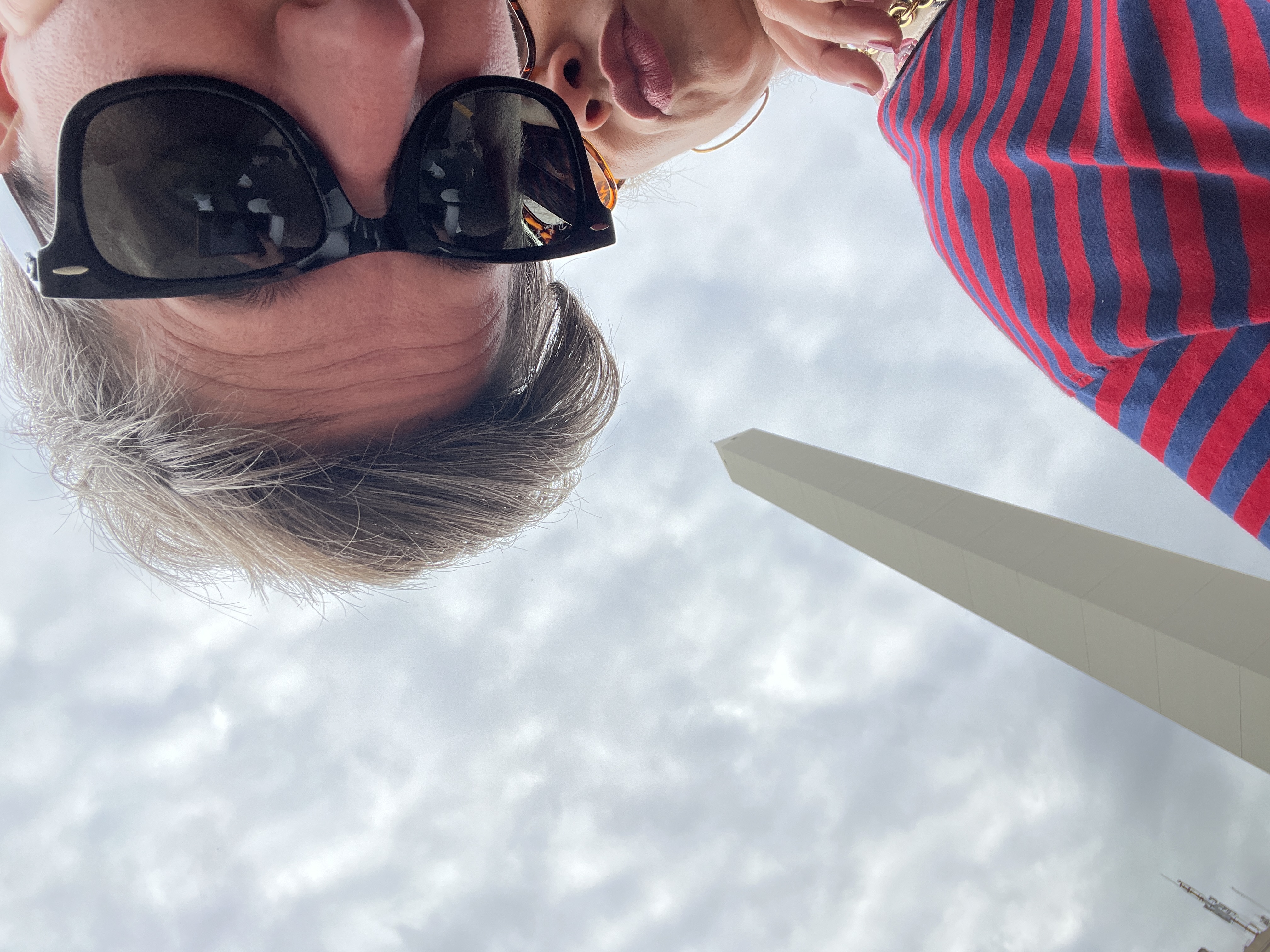
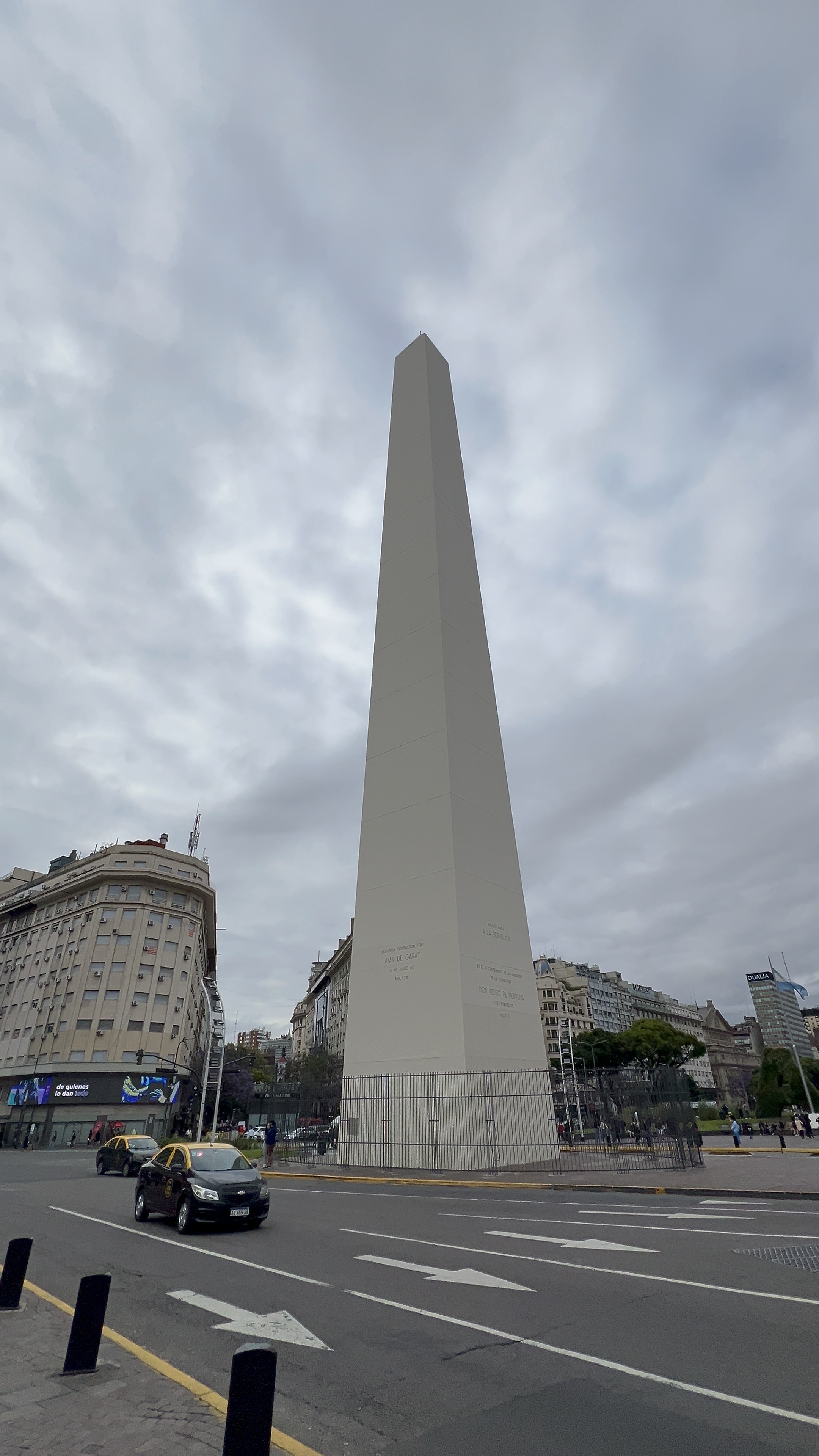
Epic. The Obelisco stands at the intersection of major avenues and is probably the landmark that is most associated with the city. Seeing in real life made me feel like I finally made it to one of my bucketlist destinations!
Buenos Aires Museum
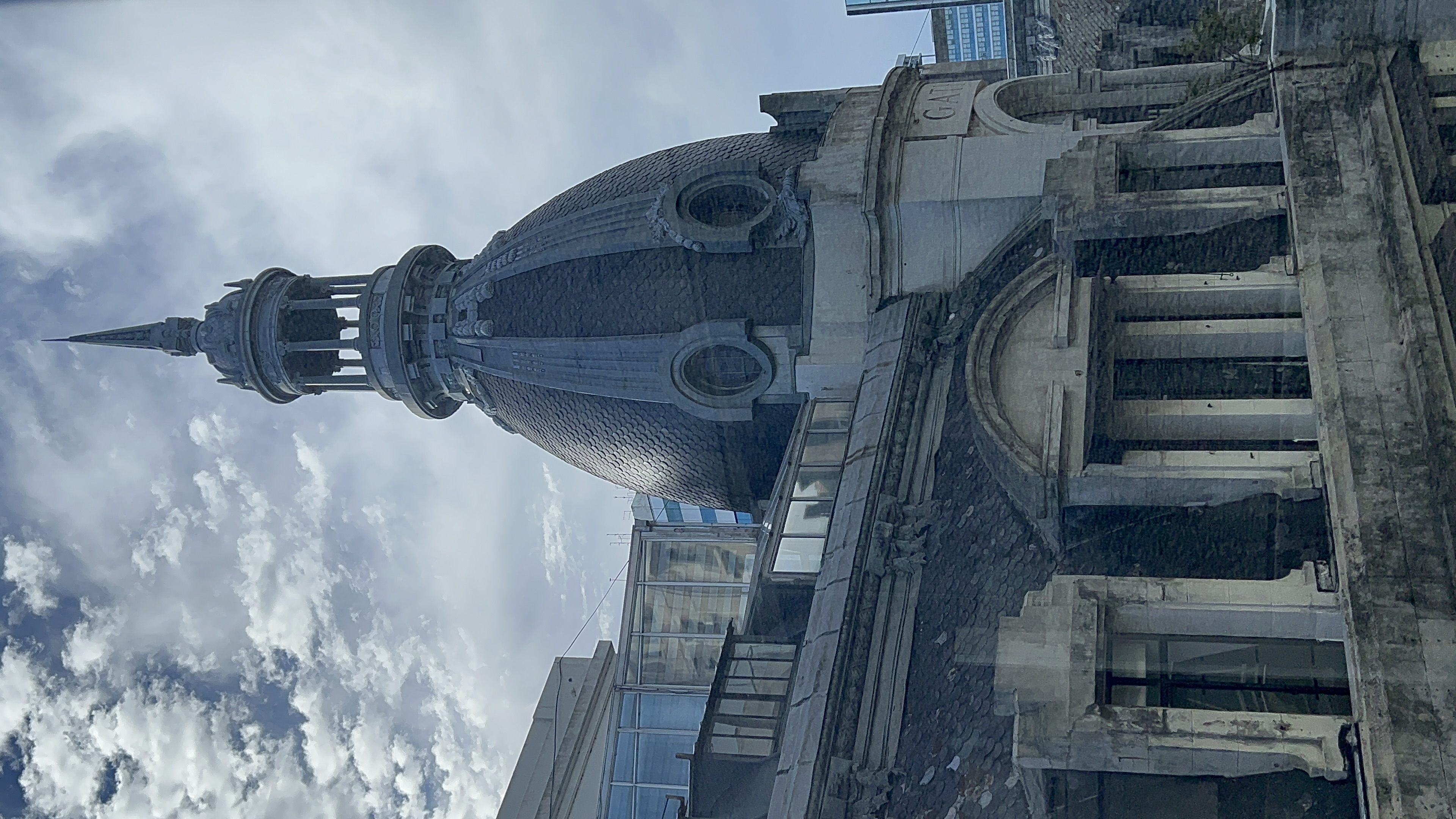
Museo de la Ciudad offers helpful context for understanding how Buenos Aires became what it is today. Its collections include photographs, plans, furniture, postcards, magazine and curious everyday objects. Buenos Aires is a city of rooftop escapes, and this museum had one of the best views of the city.
Florida 165
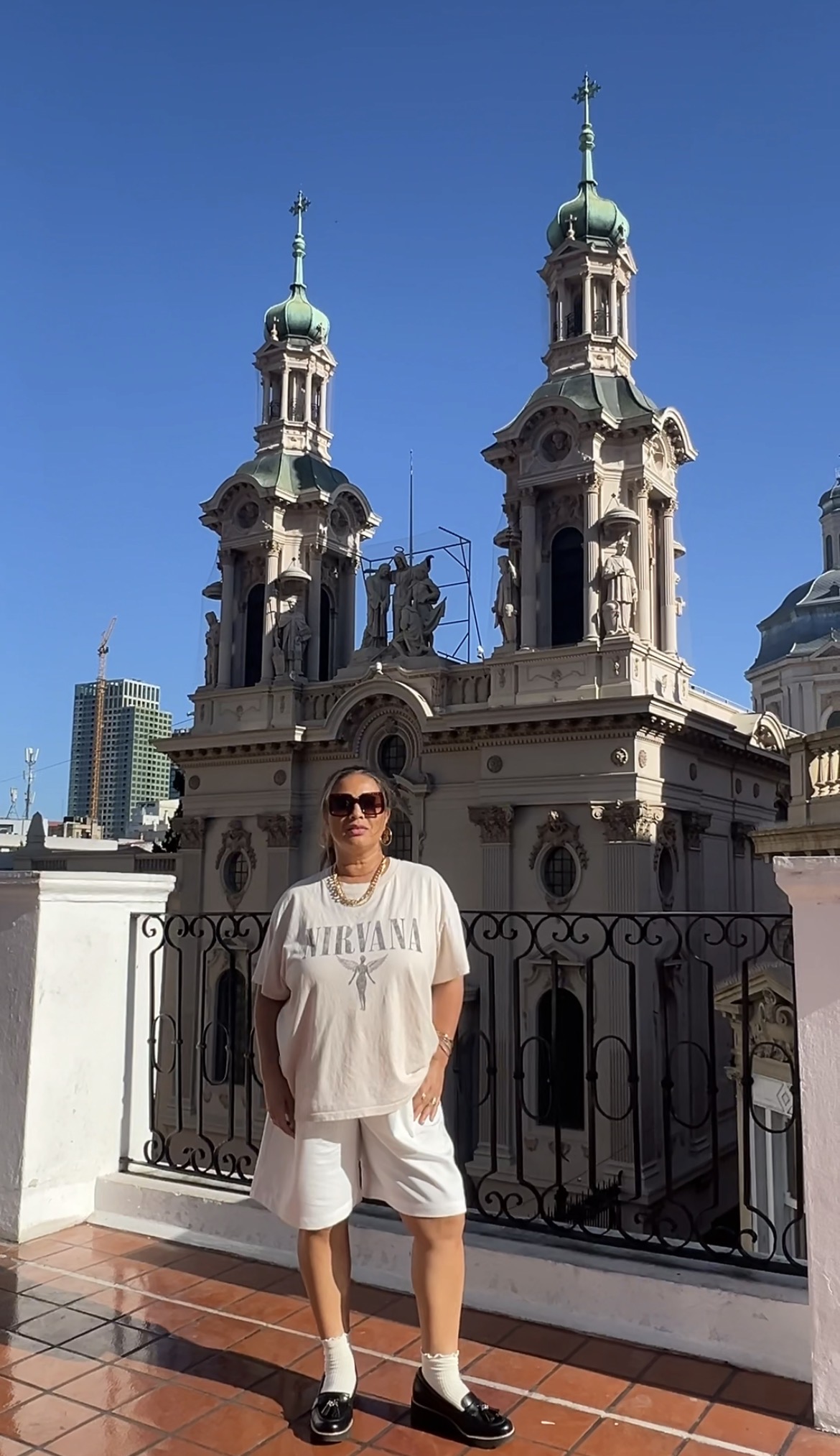
Florida 165 was one of our favorite places to take in the city from above. The view looks straight into the heart of Buenos Aires, with historic buildings, domes, and traffic moving below. It’s an easy place to linger, especially toward the end of the day, when the light shifts and the city starts to feel cinematic.
Salon 1923
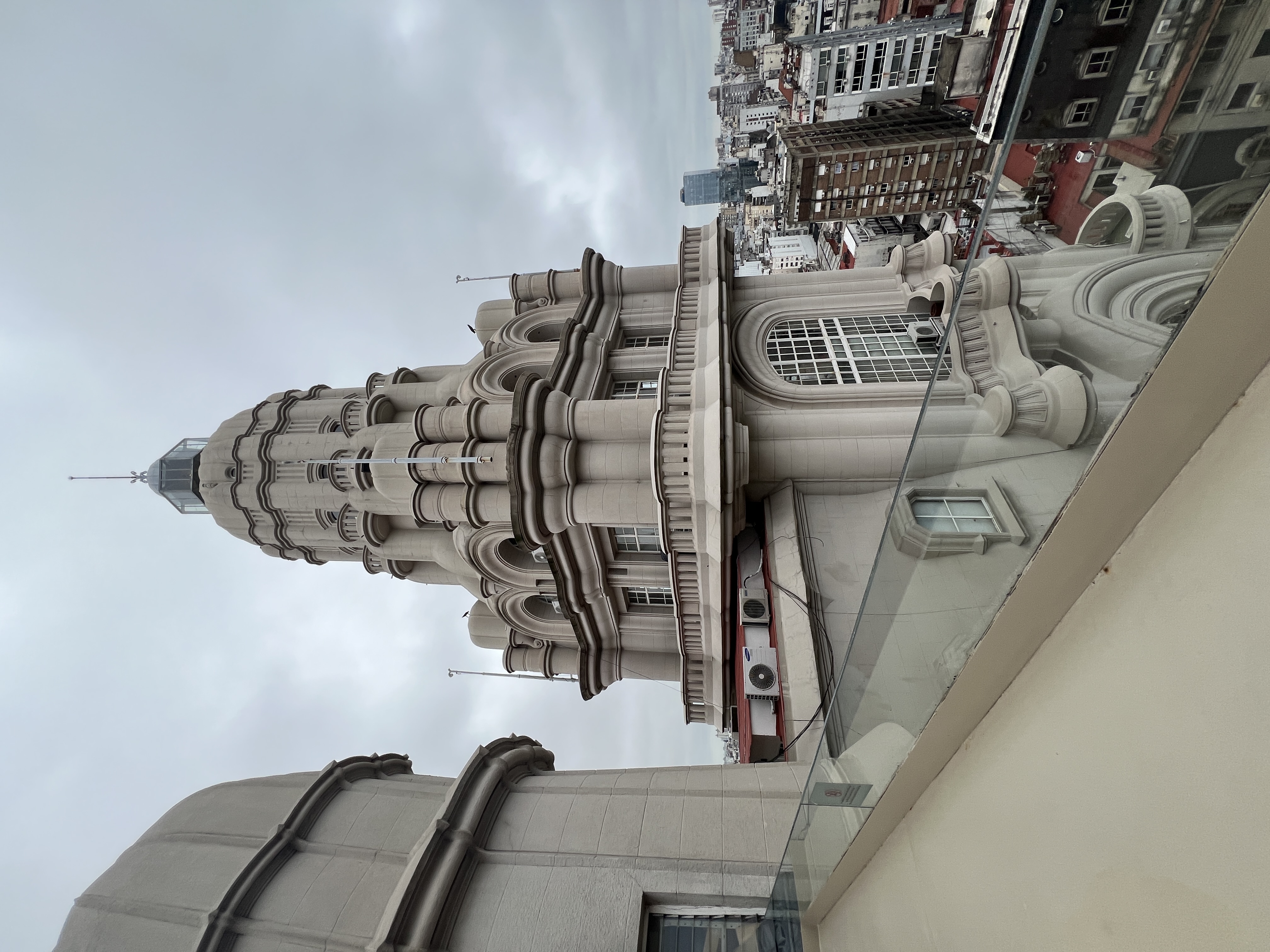
Another rooftop bar. Why, yes! Buenos Aires is filled with rooftop cafes and bars that offer a spectacular view of the city. In this case, we got up close and personal with the view of Barolo Palace! Definitely worth the reservation (required).
Bario Chino (Chinatown)
Barrio Chino sits loosely between Palermo and Villa Crespo, and it’s defined by its energy, independent shops, low-key bars, good food, and a mix of old and new Buenos Aires.
Rather than over-describing it, I’d recommend watching our video below. It does a better job of capturing the pace, the textures, and the feeling of Bario Chino than my words ever could.
View this post on Instagram
Patagonia
Patagonia isn’t a single destination. It’s a vast region stretching across southern Argentina, defined by glaciers, mountains, wind, and distance. We flew from Buenos Aires to El Calafate, the main gateway to southern Patagonia. The transition from dense city to open landscape is immediate and slightly disorienting.
El Calafate
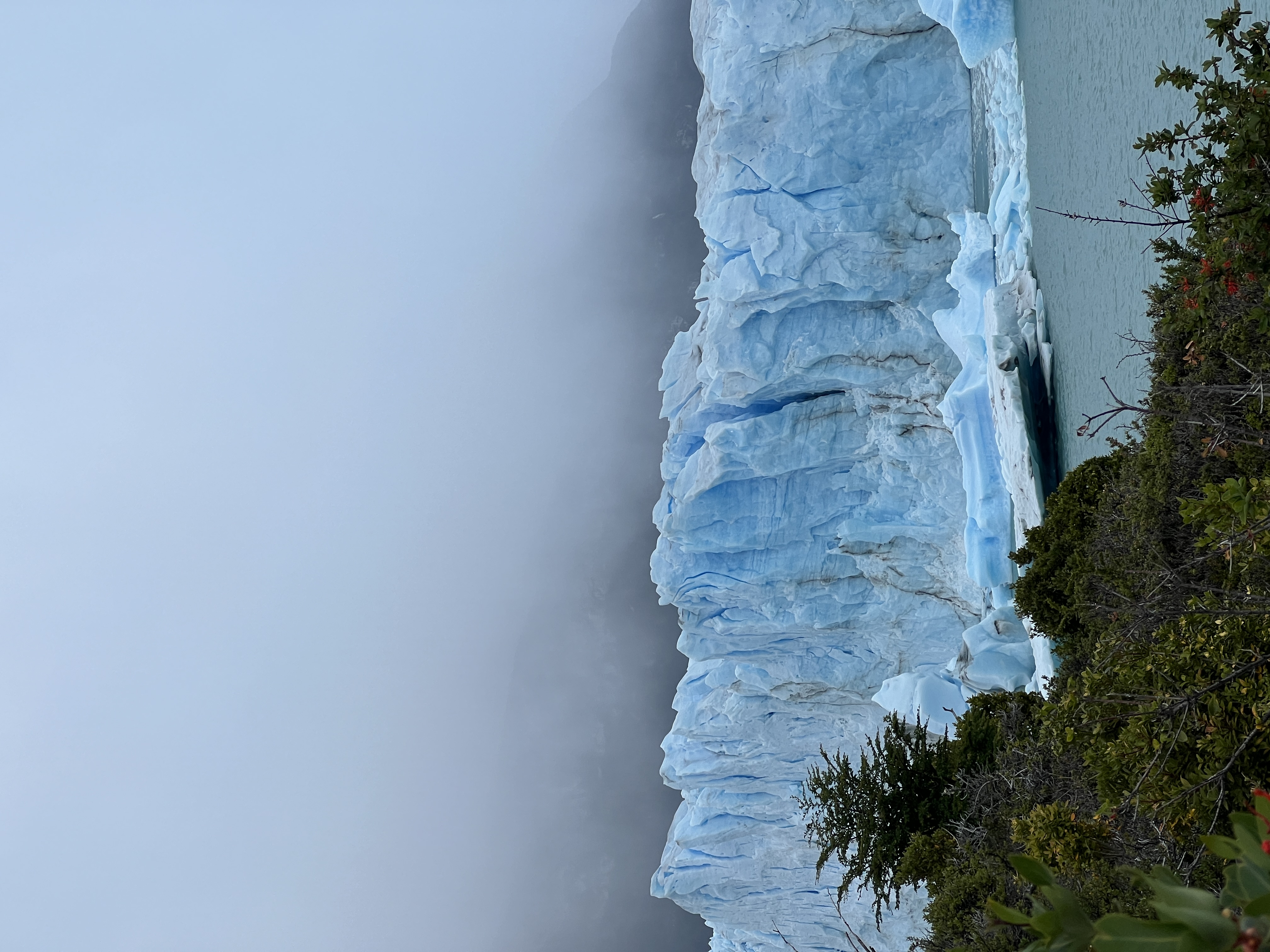
We visited El Calafate largely because of Perito Moreno Glacier, and for good reason. It’s one of the few glaciers in the world that is still advancing.
Standing in front of it is overwhelming. You hear it before you see it. Cracks echo across the ice. Massive blue walls shift and then suddenly collapse into the water below.

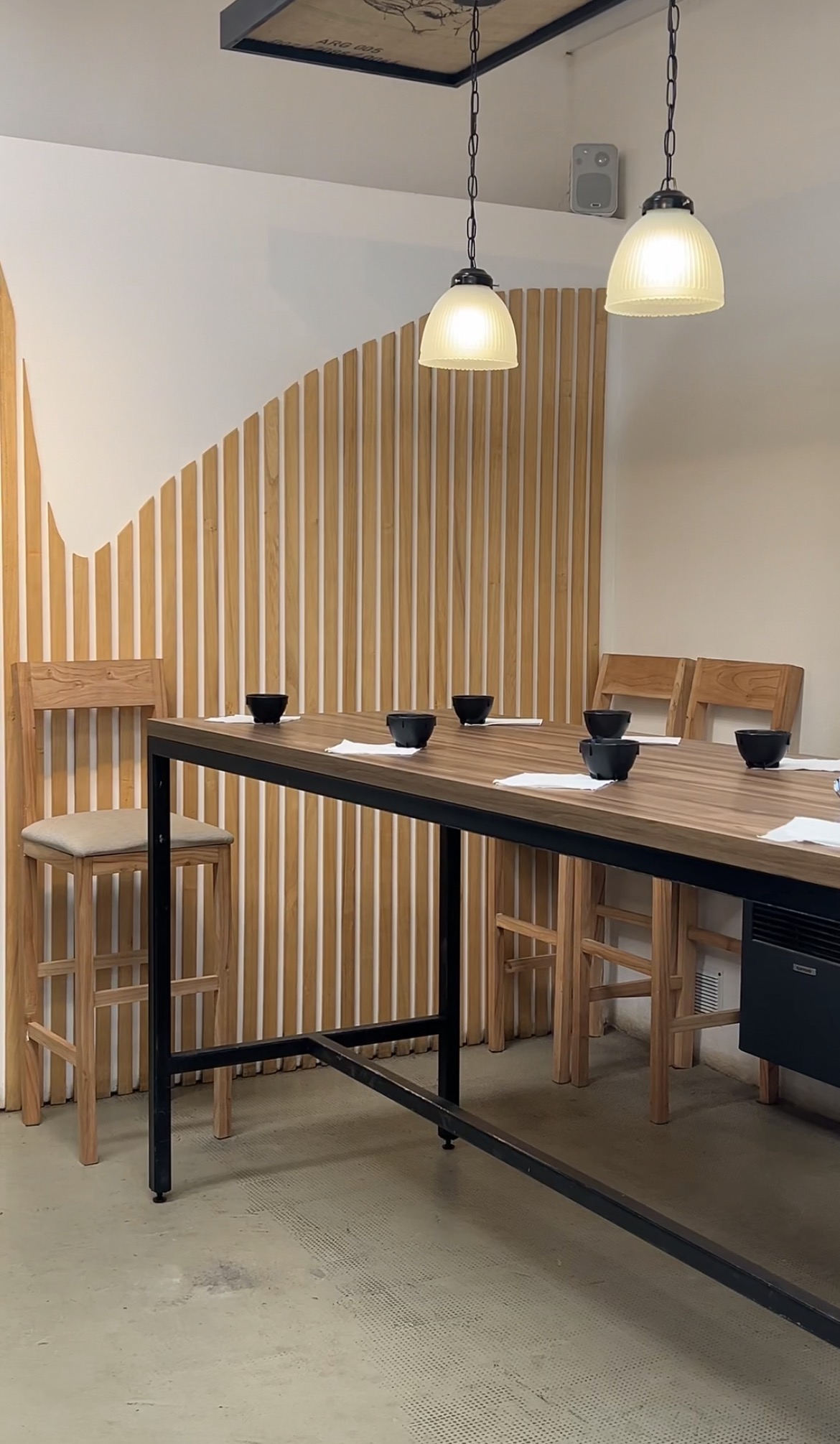
Even here, the coffee held up. Calafate Coffee Roasters offered genuinely good specialty coffee, which felt like a small but important comfort after long days outside. Actually, it was a huge comfort considering how much of a coffee lover my partner is.
El Chaltén
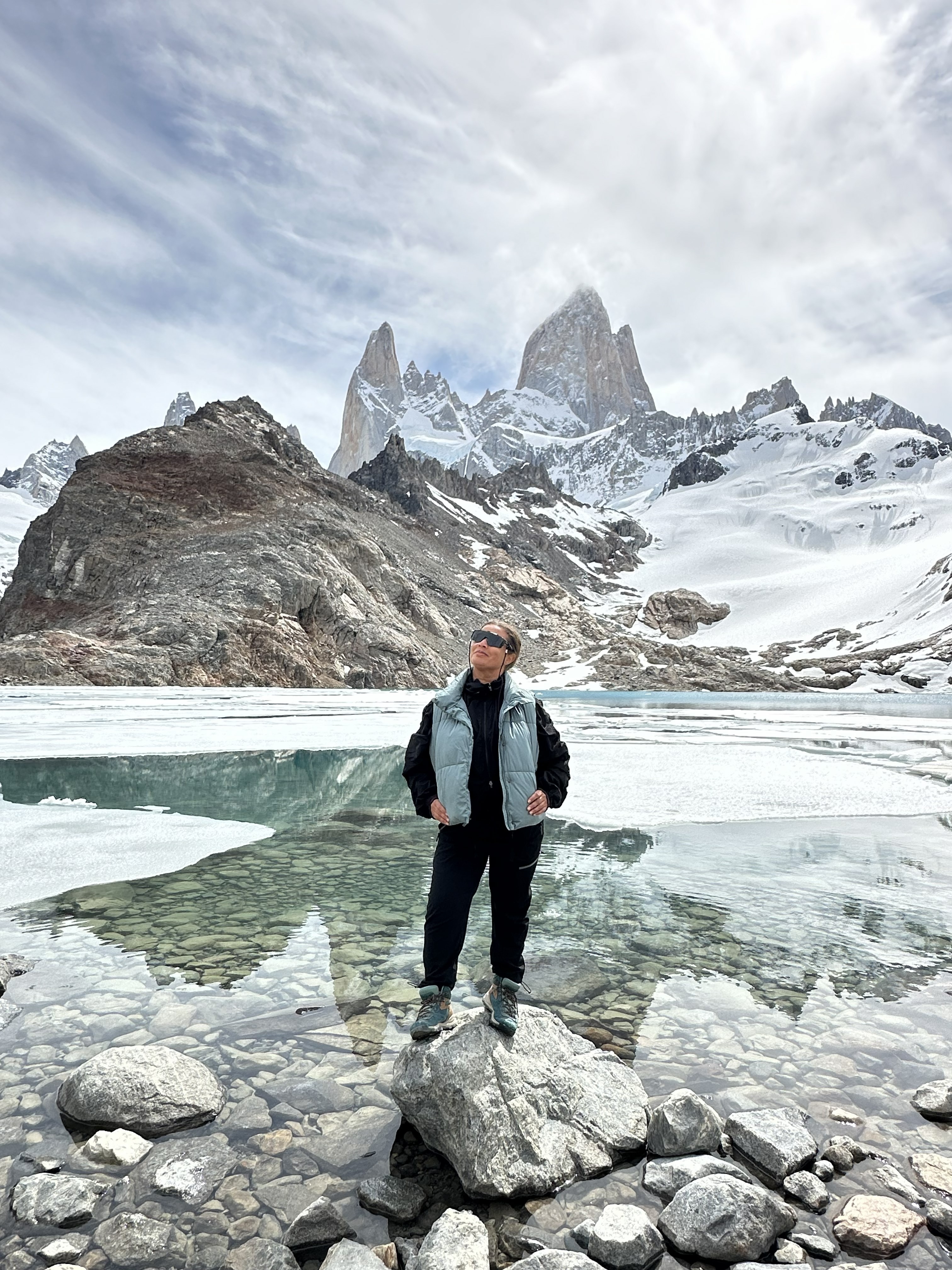
From El Calafate, we traveled to El Chaltén, a small mountain town known as Argentina’s trekking capital. We woke up at 4 a.m. to hike Laguna de los Tres before the crowds. Starting early mattered. The trail demanded focus, especially the final ascent, which is steep, exposed, and challenged me to my limits. The average time to climb round-trip is 8-10 hours, but it took us 13 with injuries. When we reached the top, Fitz Roy reflected in the glacial lagoon below and was worth every limp and fall.
Ushuaia
From Patagonia’s interior, we flew south to Ushuaia, often referred to as the southernmost city in the world. Mountains rise sharply behind the city, dropping into the Beagle Channel, and everything feels more dramatic here.
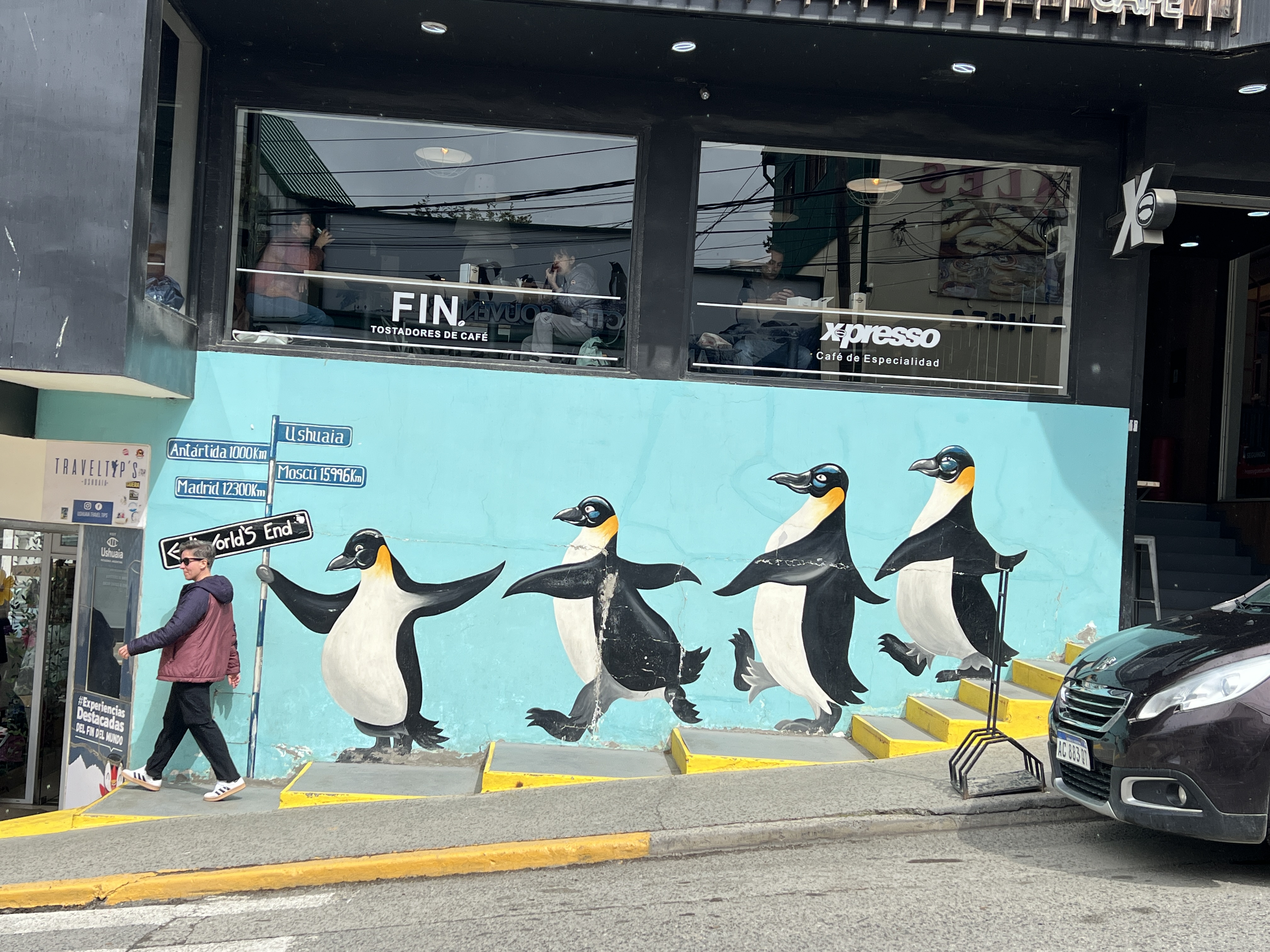
We booked the Piratour Beagle Channel and Penguin Island tour, the only company permitted to guide visitors onto Martillo Island itself. Other tours keep you on the boat, so make sure to book this excursion through Piratour if you actually want to walk with the penguins.
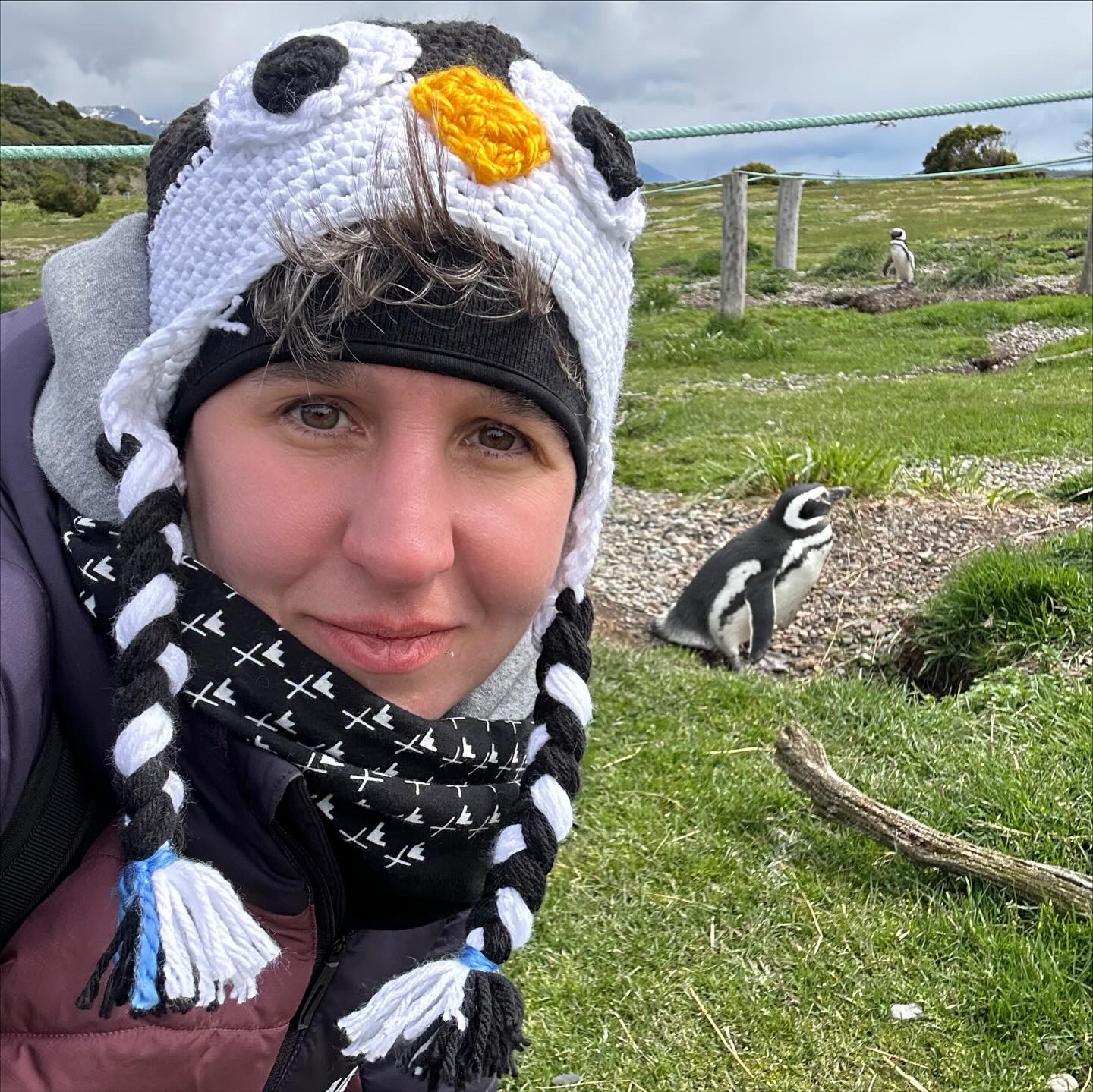
Walking among Gentoo and Magellanic penguins, close enough to hear them and watch their movements, was unlike anything else we experienced. There were no barriers and no spectacle, just quiet proximity and deep respect.
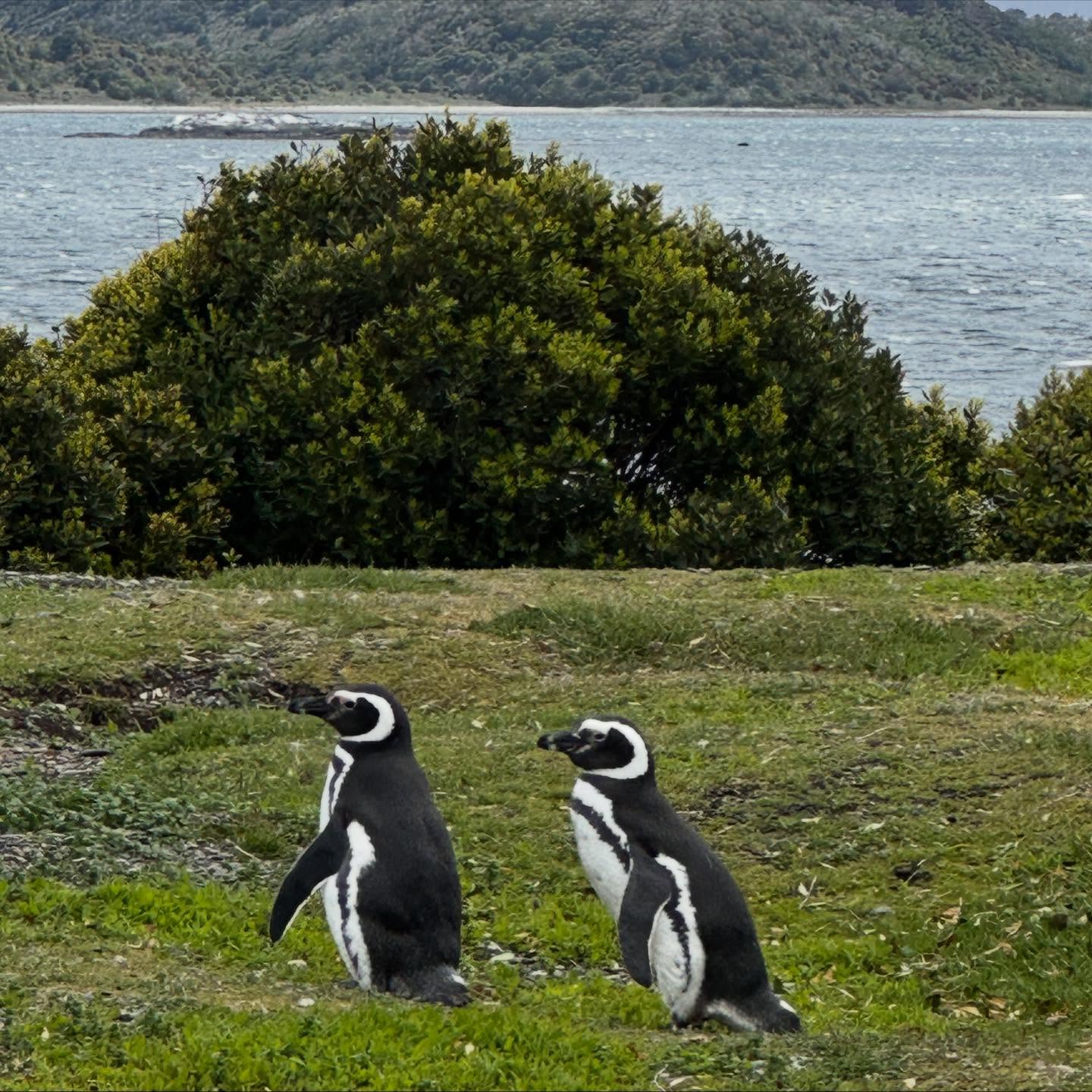
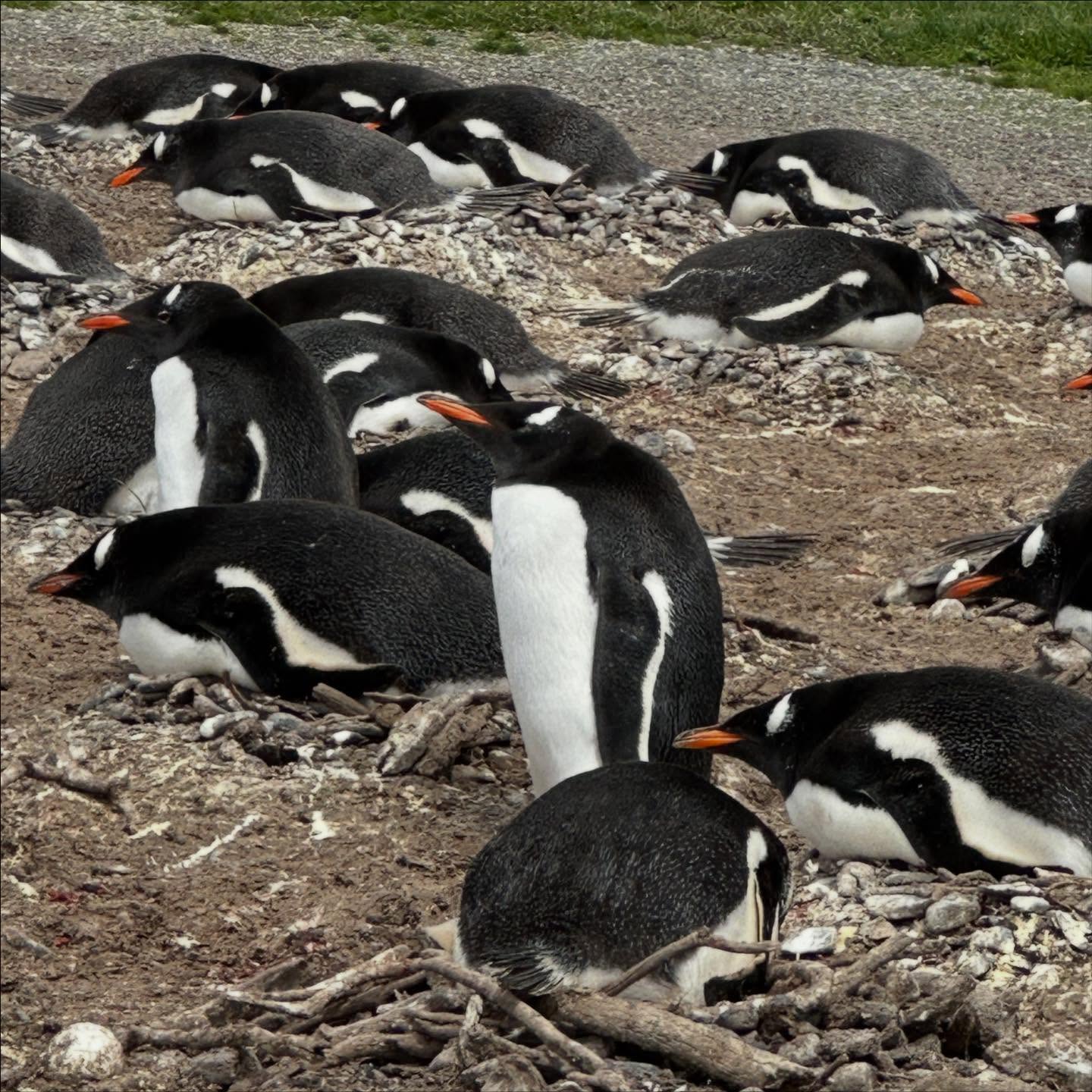
From the boat, we passed Les Éclaireurs Lighthouse, saw sea lions and fur seals gathered at Isla de los Lobos, and hundreds of nesting Imperial cormorants, rock cormorants, and South American terns at Isla de los Pájaros.
We balanced that sense of awe with rest at Arakur Ushuaia Resort & Spa, perched above the city. We booked a half-day spa experience that included hydrotherapy pools, indoor pools, outdoor infinity pools under the open sky, and a dry sauna. Warm water. Cold air. Snow-capped mountains. Simple and deeply calming.

We also booked a half-day horseback riding excursion directly through the resort and ended up being the only two on the ride. Quiet trails. No group.

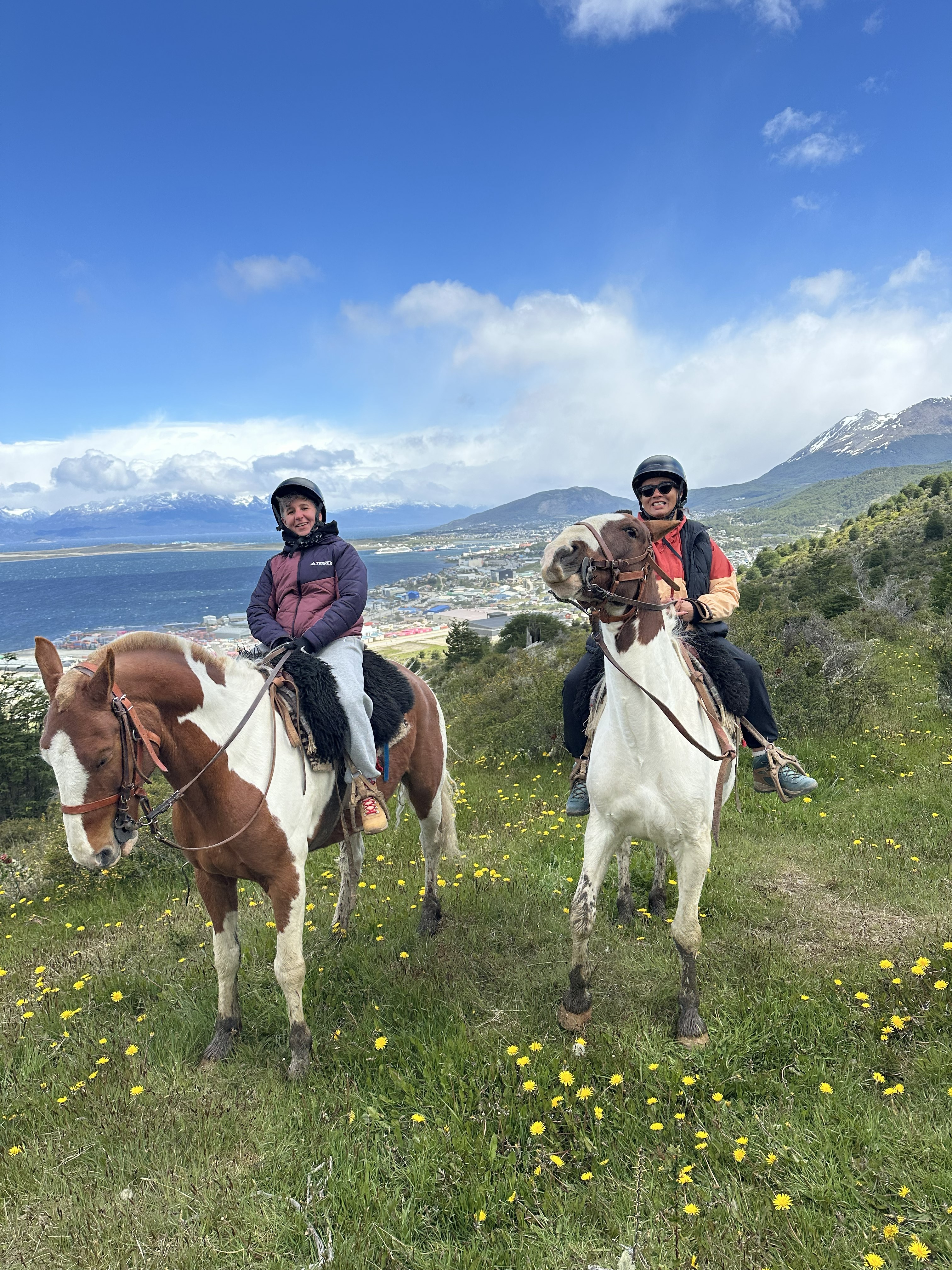
Check out our video below that includes tips on everything to do and see in Ushuia.
View this post on Instagram
Colonia del Sacramento, Uruguay
Colonia del Sacramento is an easy ferry ride from Buenos Aires and makes for a straightforward international day trip.
The ferry takes about 1 hour and 15 minutes each way, with round-trip tickets typically costing $70–$100 USD per person, depending on timing.
Colonia immediately feels slower.
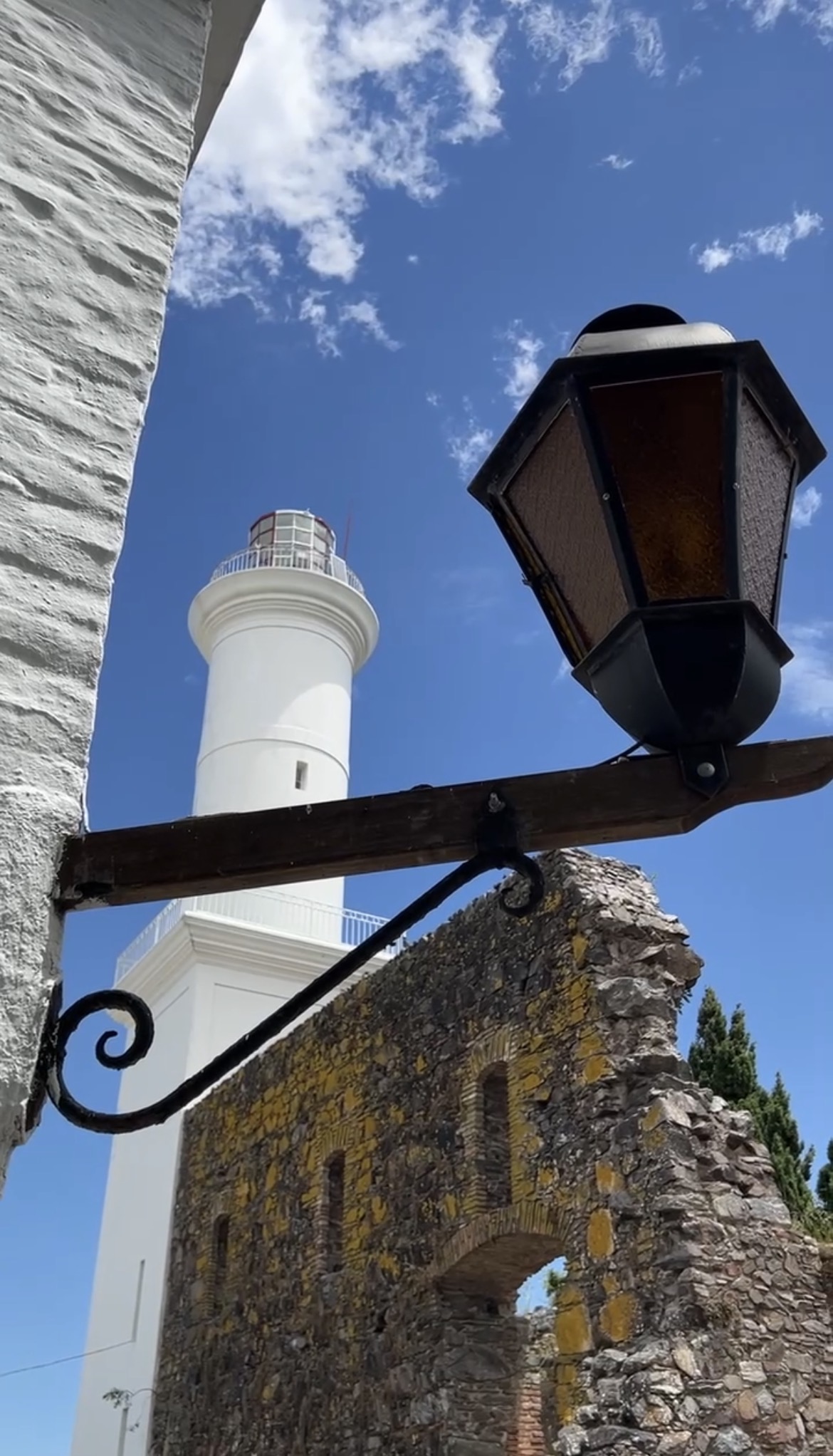
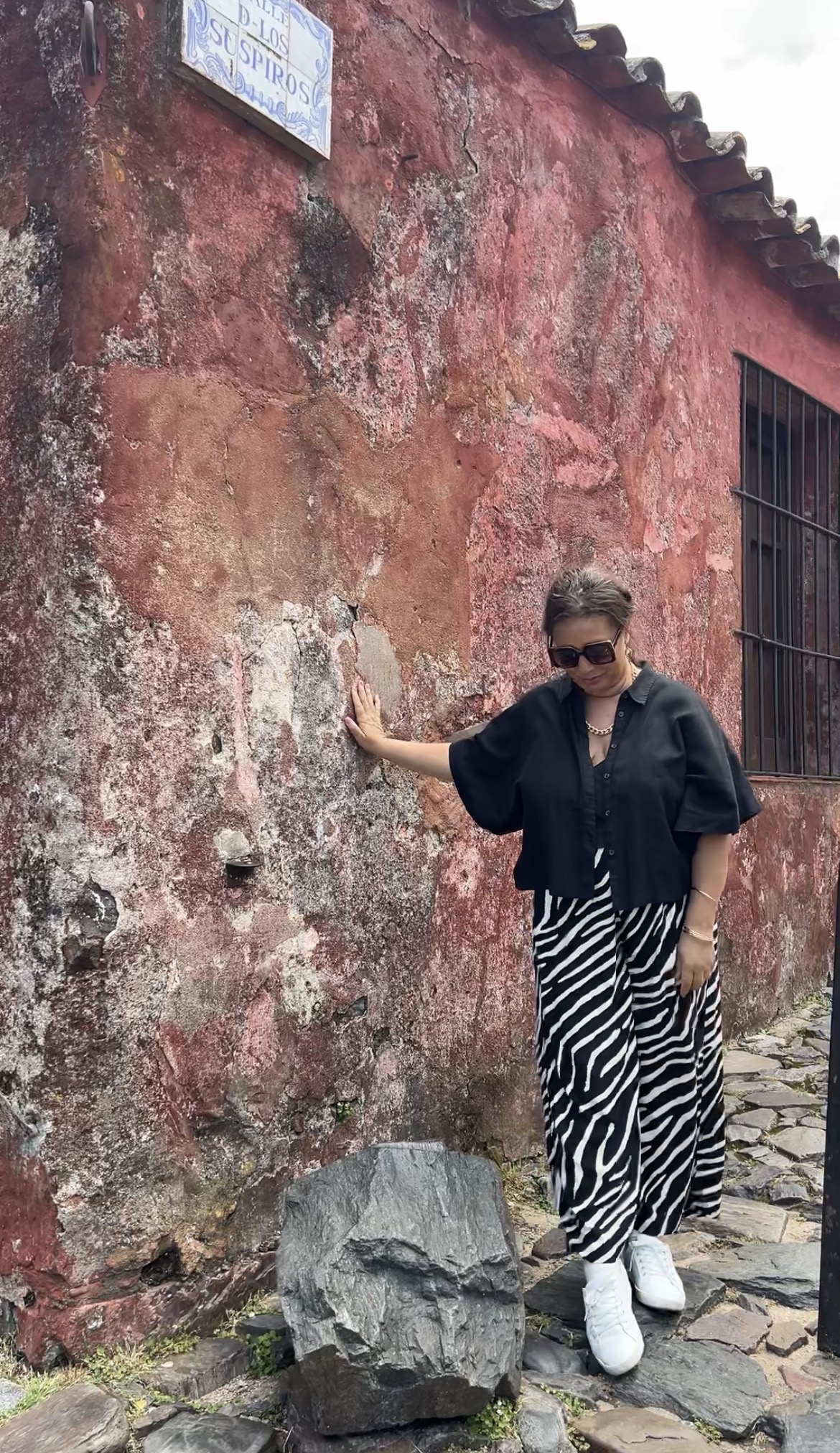
We wandered cobblestone streets, intentionally getting lost among narrow lanes. La Calle de los Suspiros felt suspended in time. We climbed the Faro de Colonia for panoramic views and walked the Rambla as the light shifted along the Río de la Plata.
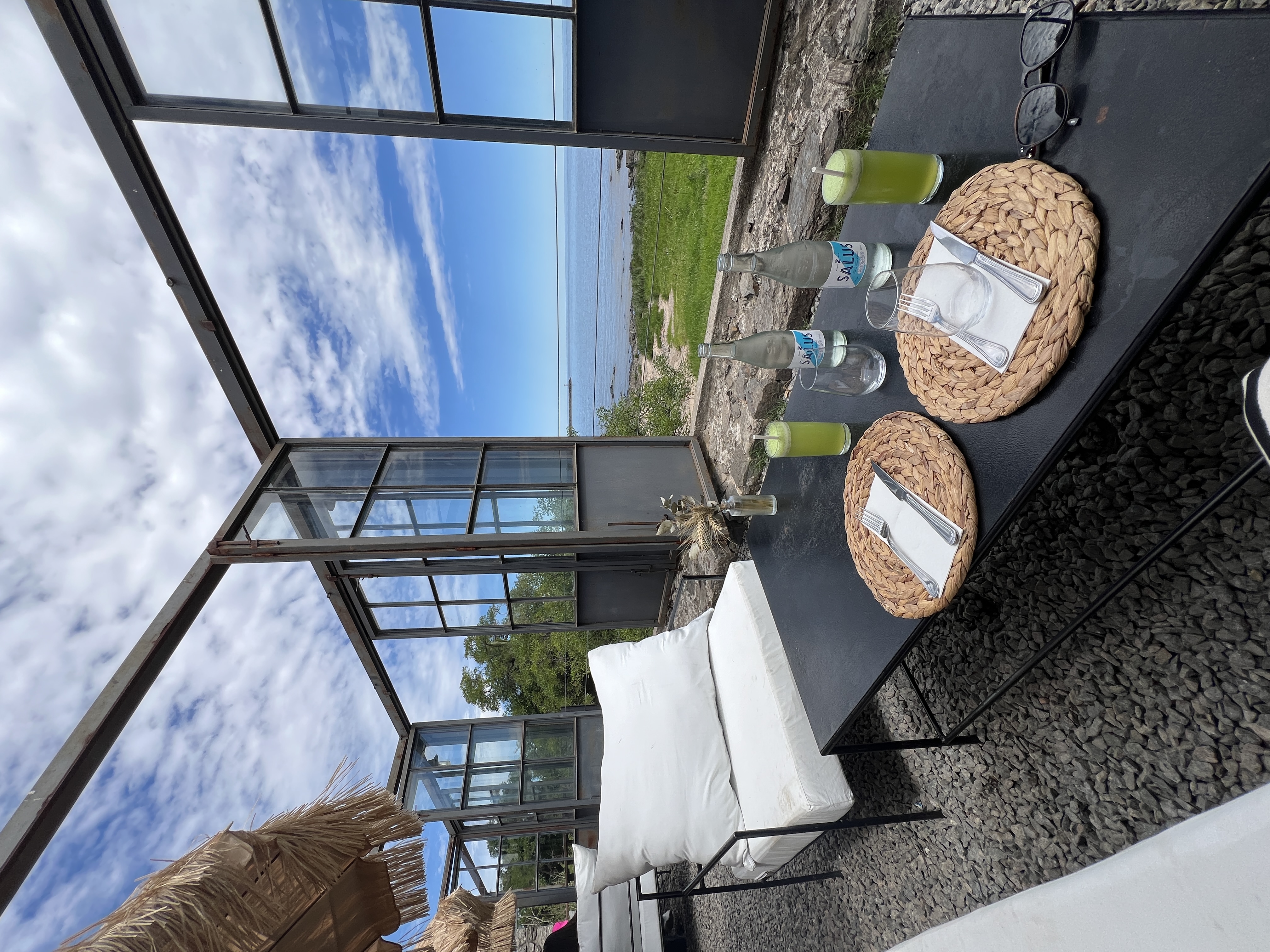
We ate at Bohemia Colonia del Sacramento, a cozy spot overlooking the bay. Homemade pastas, a strong wine list, Illy coffee, and house-made desserts will do that thing where lunch quietly becomes the entire afternoon.
The Verdict
There was no single moment that defined this trip, and that’s what made it special. It was the accumulation of small, everyday experiences. Long coffees. Quiet walks. Being seen without explanation. Argentina offered us all of that, and traveling through it with my partner of 16 years made it feel less like an escape and more like a reminder of how travel can expand your sense of ease in the world.